Quick Answer: Deep Eddy Pool at 401 Deep Eddy Ave is Austin's oldest public pool (built 1915). Spring-fed, unheated, shaded by live oaks. Small admission fee; seasonal passes available. Open seasonally — hours and pricing in the guide below.
Deep Eddy Pool isn’t just another Austin swimming spot—it’s the city’s most enduring, quietly beloved oasis. Tucked just west of downtown, this spring‑fed landmark is the oldest swimming pool in Texas and one of the few places where Austin history, everyday local life, and year‑round swimming intersect. For longtime Austinites, Deep Eddy is sacred. For newcomers, it’s astonishingly easy to miss.
This guide gives you the essential background, what to expect today, and insider intelligence on experiencing Deep Eddy like someone who grew up here.
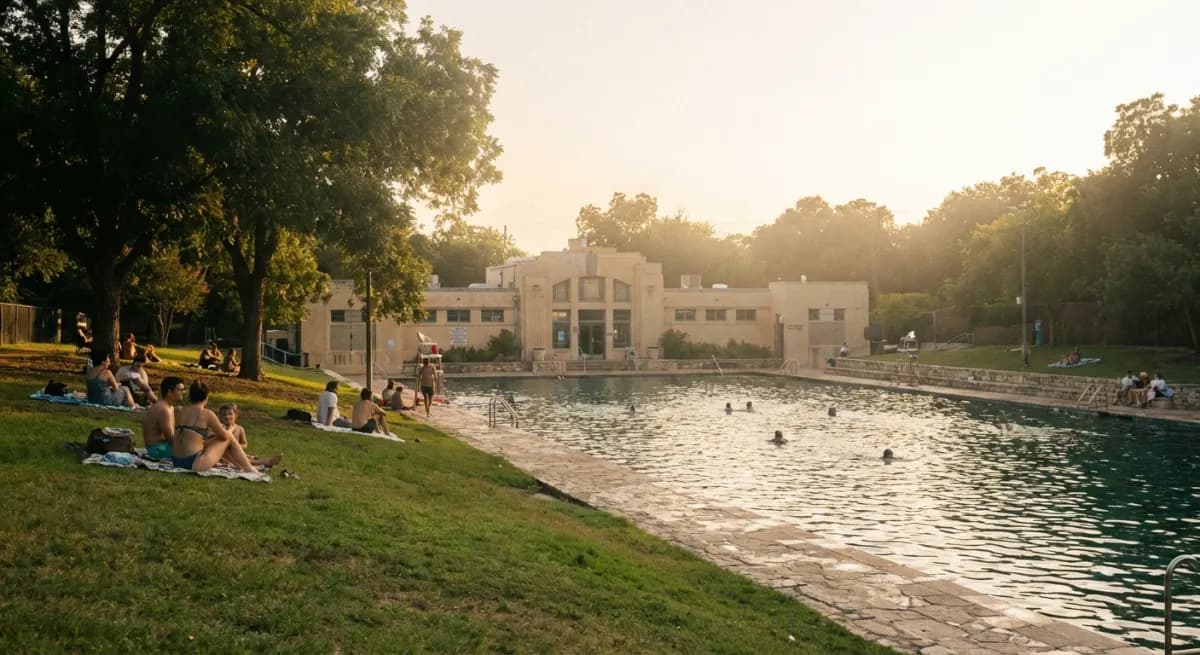
ESSENTIAL HISTORY Deep Eddy began in the early 1900s as a natural swimming hole along a deep eddy in the Colorado River. By 1915, it had transformed into a full‑blown resort featuring whimsical attractions—diving horses, a Ferris wheel, and a legendary 70‑foot slide. A devastating flood wiped out the wooden structures, but in 1936 the Works Progress Administration rebuilt the pool in the Art Deco style still visible in its historic bathhouse today.
Today, the pool is fed by cold, clear spring water kept at a steady 65–75 degrees. With no chlorine, it feels more like a natural river swim than a municipal pool.
WHAT TO EXPECT TODAY Deep Eddy remains a city‑run public pool with two main areas: • A lap pool with dedicated lanes • A shallow recreation pool for open swimming
You’ll also find: • A grassy hill overlooking the water • Shade pockets under mature trees • The historic Art Deco bathhouse • Direct access to Eilers Park and the hike‑and‑bike trail
The vibe shifts by season—summer is lively and kid‑heavy, while fall and winter bring a calm, hyperlocal crowd that treats the pool like an open‑air retreat.
INSIDER INTELLIGENCE • The best time to visit is weekday mornings or late afternoons, when the water is quietest and the lap lanes open up. • Bring a towel you don’t mind getting dusty—most seating is on the grassy knoll. • The spring‑fed water feels especially refreshing after a Barton Creek greenbelt hike. Locals often make a full loop: trail, swim, then tacos. • The bathhouse is historic, not fancy. Plan accordingly for changing or showering. • Parking is limited—street parking around Eilers Park is your safest bet.
INTERNAL LINKS TO RELATED GUIDES If you’re planning a full Austin day, these insider guides pair perfectly with a Deep Eddy visit: • “Inside Austin’s Moontowers: The Insider Guide to the City’s Last-of-Its-Kind Historic Giants” – https://austintexasthings.com/article/inside-austins-moontowers-the-insider-guide-to-the-citys-last-of-its-kind-historic-giants • “Inside The Butterfly Bar: The Insider Guide to East Austin’s Most Magical Hidden Cultural Hub” – https://austintexasthings.com/article/inside-the-butterfly-bar-the-insider-guide-to-east-austins-most-magical-hidden-cultural-hub • “Inside Austin’s Parking Meter Secrets” – https://austintexasthings.com/article/inside-austins-parking-meter-secrets-the-insider-guide-to-strategic-free-parking-by-neighborhood-and-day
PRIMARY SOURCE LINKS FOR FURTHER READING • City of Austin Aquatics Department: https://www.austintexas.gov/department/deep-eddy-pool • Texas Historical Commission overview: https://www.thc.texas.gov • WPA historical background: https://www.nps.gov
Deep Eddy Pool remains a rare piece of old Austin still thriving in plain sight. Whether you’re swimming laps under quiet morning light or sunbathing on the hill as the city hums below, this is one of the most authentic local experiences left in the urban core.
Deep Eddy Pool: Your Questions Answered
Quick Answer: Deep Eddy Pool at 401 Deep Eddy Ave is Austin's oldest public pool (built 1915). Spring-fed, unheated, shaded by live oaks. Small admission fee; seasonal passes available. Open seasonally — hours and pricing in the guide above.
Is Deep Eddy Pool Heated?
No. Deep Eddy Pool is spring-fed and unheated. In summer this is the point — the cooler water is a relief from 100°F Austin heat. In early spring the water can feel cold. The guide above covers what temperatures to expect by season and whether a wetsuit is ever worth it.
Deep Eddy Pool vs. Barton Springs — Which Should I Choose?
Both are iconic Austin swim spots. Deep Eddy is smaller, more shaded, less crowded, and better suited to a mellow afternoon. Barton Springs is larger, more scenic, set in Zilker Park, and tends toward a more social, active scene. If you want seclusion and shade, Deep Eddy wins. If you want a larger swim area and the full Austin outdoor experience, Barton Springs is the call. The guide above goes deeper on both.
What Makes Deep Eddy Pool Special?
Deep Eddy Pool was built in 1915 — making it not only Austin's oldest pool but one of the oldest public pools in Texas. The surrounding live oak grove, the Depression-era bathhouse architecture, and the fact that it's genuinely overlooked by tourists make it feel like a local secret. The full history and insider tips are in the guide above.
Related Austin Data
Share this article