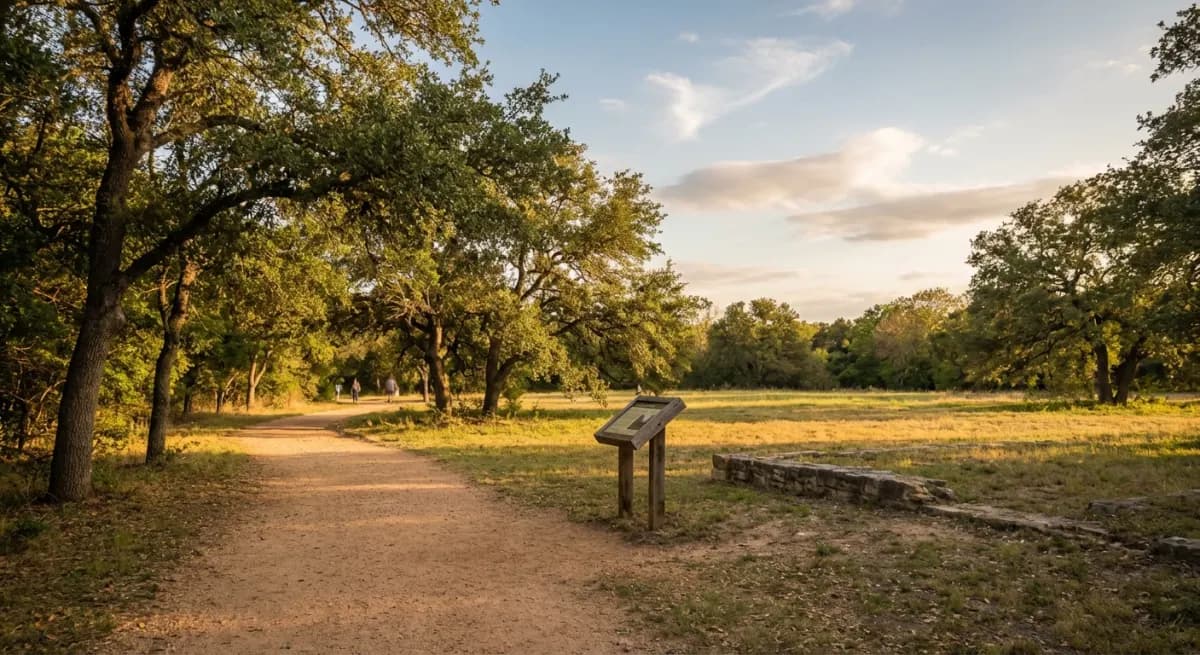
Pease District Park today feels like an easygoing slice of urban Austin life, but just beneath its trails and tree canopy sits one of the city’s most important and least‑known historic landscapes. Long before it became a public green space, this acreage formed the heart of the 365‑acre Woodlawn Homestead — the estate of Texas Governor E.M. Pease and his wife Lucadia during the Civil War era, later donated as public land in 1875 (a timeline detailed on the Pease Park Conservancy site).
🗺️100+ areas with interactive maps and local data
Pease District Park anchors the Shoal Creek Greenway just west of downtown and Clarksville, making it an easy stop to pair with other central Austin historic sites.
While Governor Pease was publicly aligned with the Union, historical research reveals that at least 37 individuals were directly enslaved by or leased as enslaved labor to the Pease family. Their work built and sustained the estate that eventually became the park tens of thousands of Austinites use daily, a history now reflected in the evolving interpretation of the park’s past on the Pease Park Conservancy homepage and in citywide efforts to preserve historic Austin parks. Today, new public programming is helping bring these stories into the open.
When you visit, remember that Pease District Park is not just a recreational space — it’s also a landscape shaped by the lives and labor of enslaved people whose stories are only recently being centered in public interpretation.
VISITING PEASE DISTRICT PARK
Location: 1100 Kingsbury Street, Austin, TX 78703
Hours: 5 a.m.–10 p.m. daily
Admission: Free
Parking: Main lot + ACC Rio Grande garage (weekends only)
Pease District Park
$For the coolest temperatures and quieter trails, aim for early morning or just before sunset — especially in late spring and summer.
Parking lots can fill quickly on nice-weather weekends and during events. Double-check signage at the ACC Rio Grande garage to confirm public parking rules before leaving your car.
AMENITIES
• Trails for walking, biking, and strollers
• Kingsbury Commons playground and nature play area
• Picnic tables and shaded lawns
• Seasonal splash pad (May 1–Oct 31)
• Leashed dogs allowed; off‑leash area nearby
Families with kids tend to gravitate toward Kingsbury Commons and the splash pad. If you’re seeking a quieter experience, follow the trails north or south along Shoal Creek away from the main hub.
THE WOODLAWN HOMESTEAD: A HIDDEN HISTORIC LANDSCAPE
The Pease family acquired the Woodlawn estate before the Civil War, developing it into a working homestead supported by a sizable enslaved labor force, a context echoed in regional histories of Pease District Park. These individuals maintained the land, constructed infrastructure, and supported the household that would later be celebrated for its political influence. Their labor underpinned the wealth that made Pease a major figure in early Austin development, and it also tied the estate into the broader story of Shoal Creek’s Black communities and the city’s early park system, as outlined in Pease Park: A Lone Star Legacy Park.
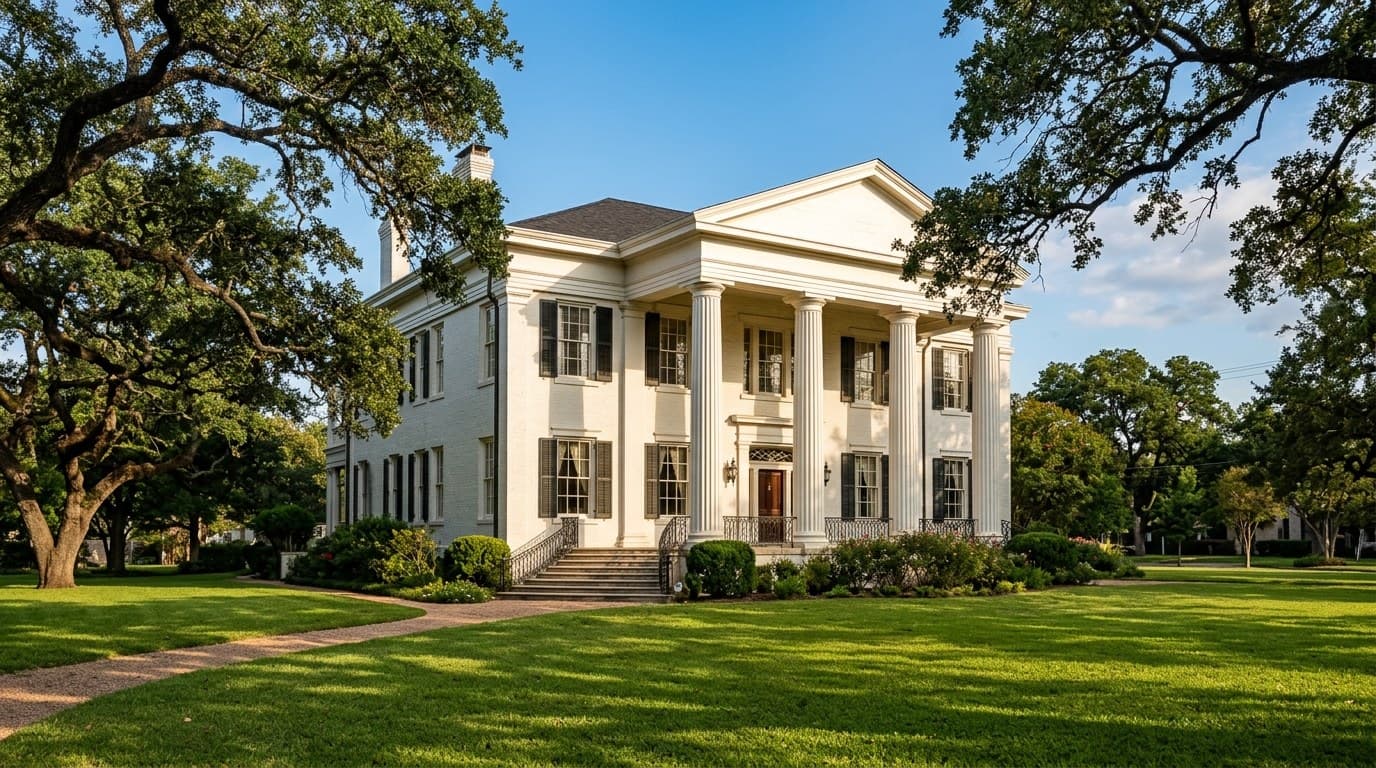
Though the original Woodlawn house still stands in the surrounding neighborhood under private ownership, the parkland itself contains the broader acreage once worked by enslaved individuals — a history the city is beginning to interpret more openly through both conservancy efforts and local archival work. For visitors interested in how other historic Austin spaces have evolved, the story of public recreation at Deep Eddy Pool offers a compelling parallel.
INSIDER INTELLIGENCE: WHERE HISTORY MEETS THE MODERN PARK
• February walking tours (Feb 21 and 28) now introduce visitors to the names, stories, and roles of the enslaved individuals connected to the estate. These programs are among the first publicly accessible interpretations of the site’s full history and dovetail with broader park‑wide initiatives chronicled on CityDays’ Pease District Park guide.
• Much of the park’s current trail alignment mirrors older roadbeds and work routes used during the homestead period, forming part of the Shoal Creek corridor that has been refined over time into today’s greenway system described by the Texas Recreation & Park Society.
• Kingsbury Commons sits near the historic core of the estate’s agricultural operations, though little visible structure remains, and its recent transformation into a modern activity hub is profiled in depth by the Pease Park Conservancy.
• The Pease family papers and city surveys are primary sources documenting the enslaved laborers — a resource now being incorporated into community programming alongside materials preserved in the Austin History Center.
Check the Pease Park Conservancy events calendar before your visit; guided walks, volunteer days, and history programs can add a lot of depth to a simple stroll through the park.
INTERNAL LINKS YOU CAN EXPLORE NEXT
For more Austin history and heritage context:
• Learn how another iconic civic structure shaped the city’s nighttime skyline in Inside Austin’s Moontowers: The Insider Guide to the City’s Last-of-Its-Kind Historic Giants.
• Explore the evolution of one of Austin’s oldest public swimming spots in Inside Deep Eddy Pool: The Insider Guide to Austin’s Oldest, Most Overlooked Urban Oasis.
• For a look at how contemporary culture and history intersect in the local arts scene, check out Inside The Superfair Austin: The Insider Guide to the City’s First Artist‑Led Art Fair.
• And if you’re planning a full day of exploring central Austin, you can pair a Pease Park visit with smart, nearby parking strategies from Inside Austin’s Parking Meter Secrets: The Insider Guide to Strategic Free Parking by Neighborhood and Day.
PRIMARY SOURCE LINKS
• https://peasepark.org/history
• https://texasstatehistory.org
• https://library.austintexas.gov/ahc
Pease District Park remains one of Austin’s most beloved public landscapes — but its past is far more layered than most visitors know, as underscored by both local conservancy research and overviews like the City of Austin’s Historic Parks page. As new tours and historical programs open pathways to understanding the experiences of the individuals whose lives shaped Woodlawn, the park is becoming not only a place to relax, but a place to reckon with and learn from the city’s deeper story.
Related Austin Data
Share this article