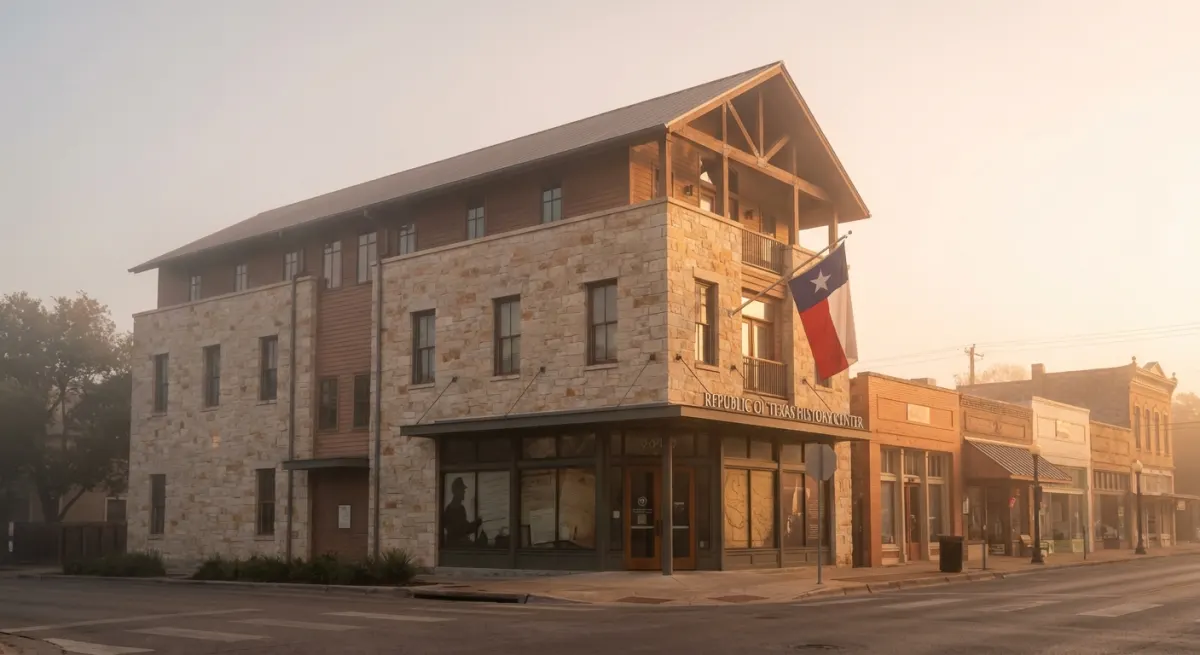
If you're looking to unlock Austin’s next major history moment, the Republic of Texas History Center is the place to start. Located between the Texas State Capitol and the Texas State Cemetery, this emerging institution is becoming one of the most compelling spaces for exploring the Texas Revolution and the Republic years through rare artifacts, immersive archives, and quietly growing public programming.
EAST CESAR CHAVEZ
Interactive map with permits, restaurants, bars & development data
Republic of Texas History Center
Here’s your insider-focused guide to what the center offers now—and how to make the most of a visit.
ESSENTIAL INFO
• Location: 810 San Marcos St., Austin, TX 78702
• Hours: Open Tuesday–Friday (closed Saturday–Monday)
• Format: Self-guided exhibits and access to select archival materials
• Focus: Texas Revolution, Republic-era documents, early governmental records, and rotating historical features
The Republic of Texas History Center is still growing into its full vision, with exhibits and public programs evolving over time. Check the official site before your visit to see what’s currently open or on view.
For deeper background on the center’s mission, Daughters of the Republic of Texas stewardship, and the bell tower and museum, see the official About the Republic of Texas History Center.
WHAT YOU’LL SEE
Expect a tightly curated display of artifacts that tell the story of Texas as an independent nation. Early maps, correspondence between key figures, and primary documents give a surprising amount of texture to a period most people only know from broad-strokes history lessons; for added context, the Texas State Historical Association offers detailed entries on many of these people and events.
Much of the center’s strength lies in its archival depth. Visitors can view rare, original materials that normally aren’t accessible to the public—an excellent resource for students, researchers, and Texas history enthusiasts, especially when paired with the Texas State Library and Archives Commission for broader statewide records. To go even deeper on how these collections shape Austin’s story, check out the insider feature Inside the Republic of Texas History Center’s Hidden Archives: The Insider Guide to Austin’s Next Big History Story.
INSIDER INTELLIGENCE
• Visit midweek in the early afternoon for the calmest experience—the center’s small footprint means crowding can limit viewing time.
Plan for a Tuesday–Thursday early afternoon visit if you want long, uninterrupted time with the documents and exhibits.
• Because the museum is closed Saturday–Monday, locals tend to forget it’s open at all. Weekdays are consistently quiet, and you can confirm current hours or special programs on the center’s events and updates page.
The center is closed Saturday–Monday and has a relatively small exhibit footprint. Avoid banking on a spontaneous weekend visit, and expect tighter spaces if a school group or tour is onsite.
• Use the stop to build a full East Austin heritage walk: the Texas State Cemetery is a 6‑minute walk away, the French Legation State Historic Site sits just next door, and the Tejano Walking Trails begin just west.
Make it a half-day East Austin history loop by pairing the center with the French Legation and a quiet walk through the Texas State Cemetery—everything is within easy walking distance.
• Parking is easiest on the residential streets directly east of San Marcos Street, though on-site and nearby options are outlined in the center’s location and parking guide.
• Staff-led deep-dive discussions aren’t posted widely online—ask at the front desk if any informal walkthroughs are happening that day, or browse the Daughters of the Republic of Texas headquarters page to learn more about their educational programs and genealogy resources tied to Republic-era families.
If you’re researching Republic-era families or early Texas politics, let staff know what you’re working on— they can often point you toward under-the-radar archival materials or DRT genealogy resources.
Whether you're diving into early Republic politics, tracing Texas’s independence story, or exploring East Austin through a heritage lens, the Republic of Texas History Center is quickly becoming a must‑visit for anyone serious about understanding the state’s identity from the ground up. For a full Austin day, you can add another immersive experience like Inside Fortlandia 2026: The Insider Guide to Austin’s Most Imaginative Outdoor Exhibition or wind down afterward with a restorative escape at Inside Lake Austin Spa Resort: The Insider Guide to Austin’s Premier Water‑Centric Wellness Retreat.
- Rich Republic-era archives
- Rare original documents on public view
- Quiet midweek visits
- Easy to combine with nearby East Austin historic sites
- Strong stop for students and dedicated history lovers
- Closed Saturday–Monday
- Small exhibit footprint so crowds can feel tight
- Staff-led programs and walkthroughs are not always listed online
- Best for visitors who enjoy reading- and research-heavy experiences
Related Austin Data
Share this article