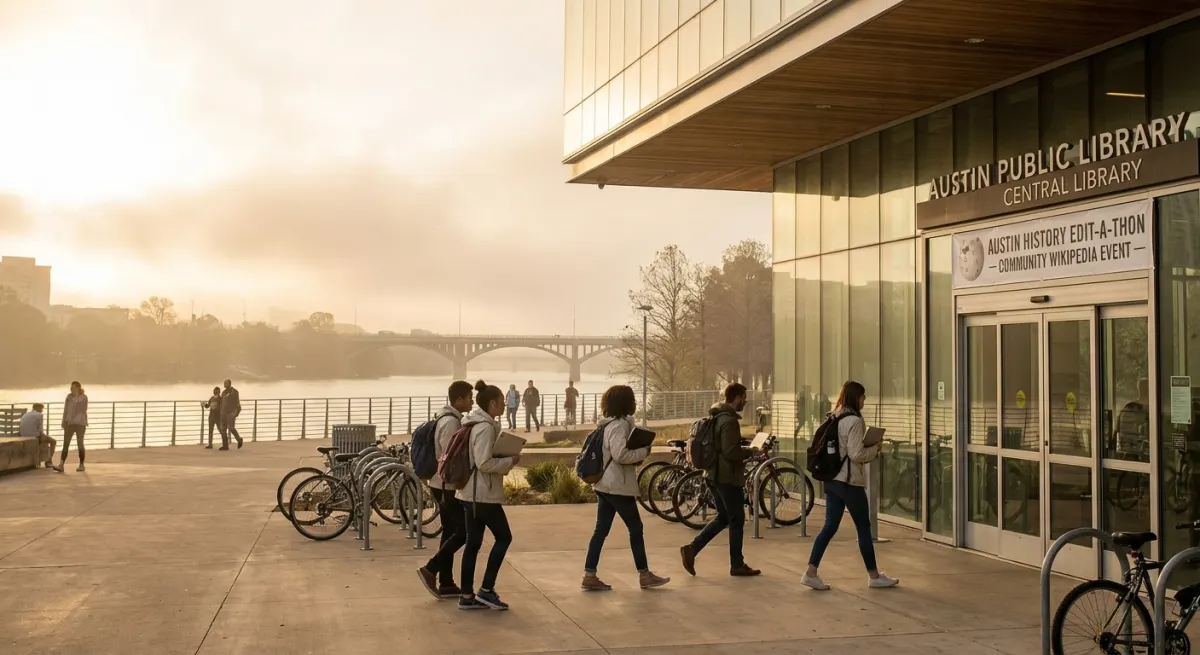
Austin’s past is always evolving, and this month, history lovers get a rare opportunity to help shape how that history is documented and remembered. On Monday, March 9, 2026, the Austin Public Library will host Wikicurious – The History of Austin, a community-driven research and storytelling event created in partnership with Wikimedia NYC. Running from 1 to 5 p.m., the gathering invites locals to explore, edit, and expand historical content about Austin — all while learning from librarians, Wikipedia editors, and fellow enthusiasts.
DOWNTOWN
Interactive map with permits, restaurants, bars & development data
Austin Public Library – Central Library
FreeWhat makes Wikicurious different from typical lectures or museum programs is its hands-on model. Instead of being told what Austin’s history is, attendees actively participate in documenting it. From researching overlooked neighborhoods to verifying key events using resources like the History of Austin, Texas and the Timeline of Austin, Texas to improving public articles, this event turns everyone into a steward of Austin’s story.
You don’t need to be a historian or a power editor to contribute. Even small fixes — like cleaning up citations, adding photo credits, or clarifying a few sentences — make Austin’s online history more accurate and accessible.
Essential Information
• Date: Monday, March 9, 2026
• Time: 1–5 p.m.
• Location: Austin Public Library – Central Library, 710 W. César Chávez St., Austin, TX 78701
• Hosted by: Wikimedia NYC in collaboration with Austin Public Library
Parking and Arrival Tips
The Central Library’s underground garage on West Avenue offers the first hour free, with tiered rates afterward. Street parking is available on surrounding blocks, and City Hall’s garage makes a convenient overflow option. If you’re already downtown, you can pair the event with an evening out or explore nearby deals highlighted in guides like Inside Downtown Austin’s Free Parking Pilot: The Insider Guide to Saving Money While Supporting Local Businesses. Arrive early if you prefer quieter workspaces; the library’s upper floors and reading nooks fill quickly on event days.
The Central Library garage can fill up on busy days, and rates climb quickly after the first free hour. Double-check posted pricing and time limits if you plan to stay for the full four-hour session.
If you’re making a day of it downtown, park once and leave your car — stack Wikicurious with a pre- or post-event coffee, happy hour, or dinner nearby to get the most from your parking spend.
What to Expect Inside
Attendees can participate in guided sessions for beginners or spend the afternoon independently researching Austin-related topics. For broader context before you dive in, it’s helpful to skim entries such as Austin, Texas and the Category: History of Austin, Texas. Librarians will help access archives, reference materials, and digital databases available through the Austin Public Library Central Library. Wikipedia editors will offer best practices for sourcing, writing, and expanding historical entries, often drawing on tools like Wikipedia Editing Basics and collaborative hubs such as WikiProject Texas.
Beginner-friendly trainings usually start early in the session, so aim to arrive on time if you want a structured walkthrough before diving into your own articles.
Expect plenty of opportunities to meet community archivists, students, amateur historians, and local residents who represent the city’s diverse perspectives. Many participants choose to focus on underdocumented chapters of Austin’s heritage, from early Black settlements highlighted in resources like the History of African Americans in Austin to East Austin’s cultural evolution, which connects with living stories explored in features like Inside Austin’s Lunar New Year Legacy: The Insider Guide to East Austin’s Asian American Heritage and Community-Built Businesses, to the changing landscape of public spaces mapped in projects such as the Austin Historical Atlas: Mapping Austin’s Historical Markers.
Insider Intelligence
• Bring a laptop. While the library has public computers, the most productive editors bring their own devices.
• Create a Wikipedia account beforehand to skip on-site setup and review editing basics.
• Prepare a list of Austin topics you think deserve more visibility — the facilitators love helping attendees chase down overlooked stories, and tools like WikiProject Texas and the Category: History of Austin, Texas make it easy to see what’s missing.
• The sixth-floor rooftop garden is an ideal break spot between research sessions.
• Librarians recommend arriving by 12:40 p.m. if you want a comfortable seat near power outlets.
Treat this like a mini research residency: bring your own laptop, create your Wikipedia account at home, and show up with a short list of Austin stories you’re curious about so you can jump straight into the stacks.
Helpful Internal Reading
For more Austin insights and cultural context, explore related pieces that pair nicely with a day at Wikicurious:
• Inside Downtown Austin’s Free Parking Pilot: The Insider Guide to Saving Money While Supporting Local Businesses – Perfect if you’re planning to drive in for the event and want to make the most of downtown before or after you edit.
• Inside Austin’s Sistine Chapel Experience: The Insider Guide to Michelangelo’s Masterpiece Reimagined – A look at how Austin reimagines global art and history locally, offering inspiration for cultural entries.
• Inside Deep In The Heart: The Insider Guide to Art For The People Gallery’s Newest Group Exhibition – A window into how contemporary artists interpret Texas stories, which can spark ideas for art and culture sections in Austin-related articles.
• Inside Keep Black Austin Weird: The Insider Guide to the City’s Boldest Black Alternative Fashion & Music Showcase – A modern lens on Black creativity in Austin that complements historical research into early Black neighborhoods and cultural spaces.
• Inside Papercut: The Hidden East Austin Art Bar Reinventing Cocktails Through Rotating Exhibitions – A story of East Austin’s evolving creative scene, useful for contrasting present-day culture with the historical East Austin you might be documenting.
• Inside North Lamar’s Dining Transformation: The Insider Guide to Local Foods’ 2026 Expansion and Austin’s Next Great Restaurant Corridor – A current snapshot of neighborhood change that can inform how you think about documenting Austin’s shifting districts over time.
• Inside Austin’s Tastemaker Neighborhood Restaurant Finalists: The Insider Guide to the 2026 Local Favorites Everyone’s Visiting Before April 9 – Useful for understanding how food, place, and community intersect across Austin’s neighborhoods today.
Primary Source Links
• Austin Public Library Central Library Information
• Wikimedia NYC Official Site
• Wikipedia Editing Basics
Before you leave, schedule a return visit to the Central Library — many of the archives and special collections you discover during Wikicurious can fuel deeper follow-up research on future visits.
Wikicurious offers a rare chance not just to learn Austin’s history, but to shape how that history is shared with the world. Whether you’re a lifelong resident, a newcomer, or simply curious, this collaborative event gives every attendee a voice in documenting the city’s heritage — one sourced sentence at a time.
Related Austin Data
More Austin Guides
Share this article