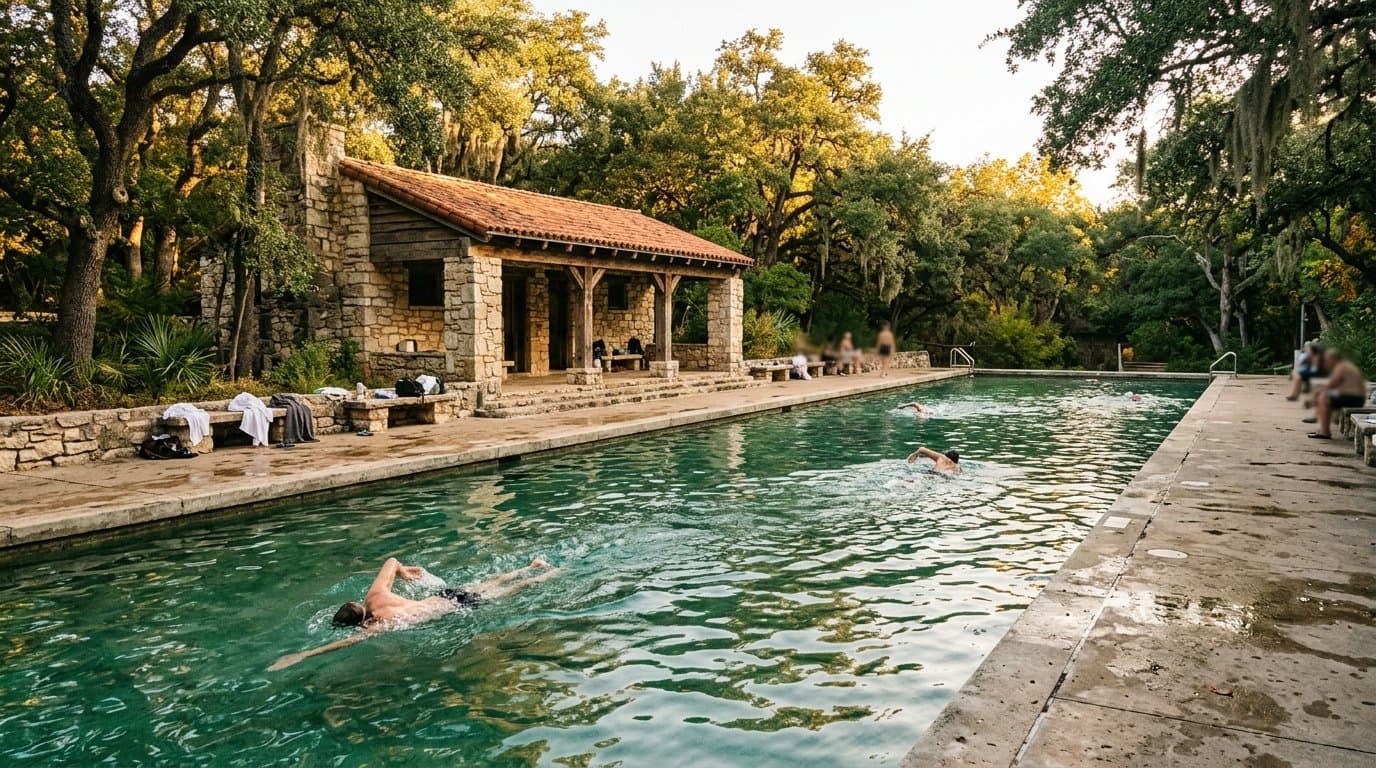
Deep Eddy Pool is 111 years old, spring- and well-fed, and never gets chlorine. Today, with the air pushing past 100°F again, its water is sitting somewhere between 68°F and 75°F — about 30 degrees colder than the sidewalk outside it.
That gap is the whole story. Austin, Texas has plenty of pools. It has exactly one that a flood, the Works Progress Administration, and a family named Eilers all had a hand in building — and it's still open today, on a Wednesday, for five dollars.
Why is Deep Eddy the oldest pool in Texas?
The site started in 1902 as a bathing beach on a stretch of the Colorado River where an eddy pooled around a limestone outcropping — Mary and Henry Johnson, whose father owned the land, opened it to the public with campsites and rental cabins. It wasn't a pool yet, just a good bend in the river.
That changed in 1915, when A.J. Eilers Sr. bought the land and, the following summer, opened a poured-concrete pool next to the natural swimming hole. For a few years it ran as a genuine carnival: a Ferris wheel, a 70-foot slide, a diving horse act called Lorena, trapeze rigs over the water. None of that survives. What survives is the pool itself, which makes it — according to the City of Austin Parks and Recreation Department — the oldest swimming pool in the state.
Deep Eddy Cabaret, the dive bar around the corner on Lake Austin Blvd, and the pool aren't officially connected — but Austin musician Jimmie Dale Gilmore name-checked both in the same song, which is about as close to a hometown seal of approval as a swimming hole gets.
What actually makes the water cold — and why isn't it chlorinated?
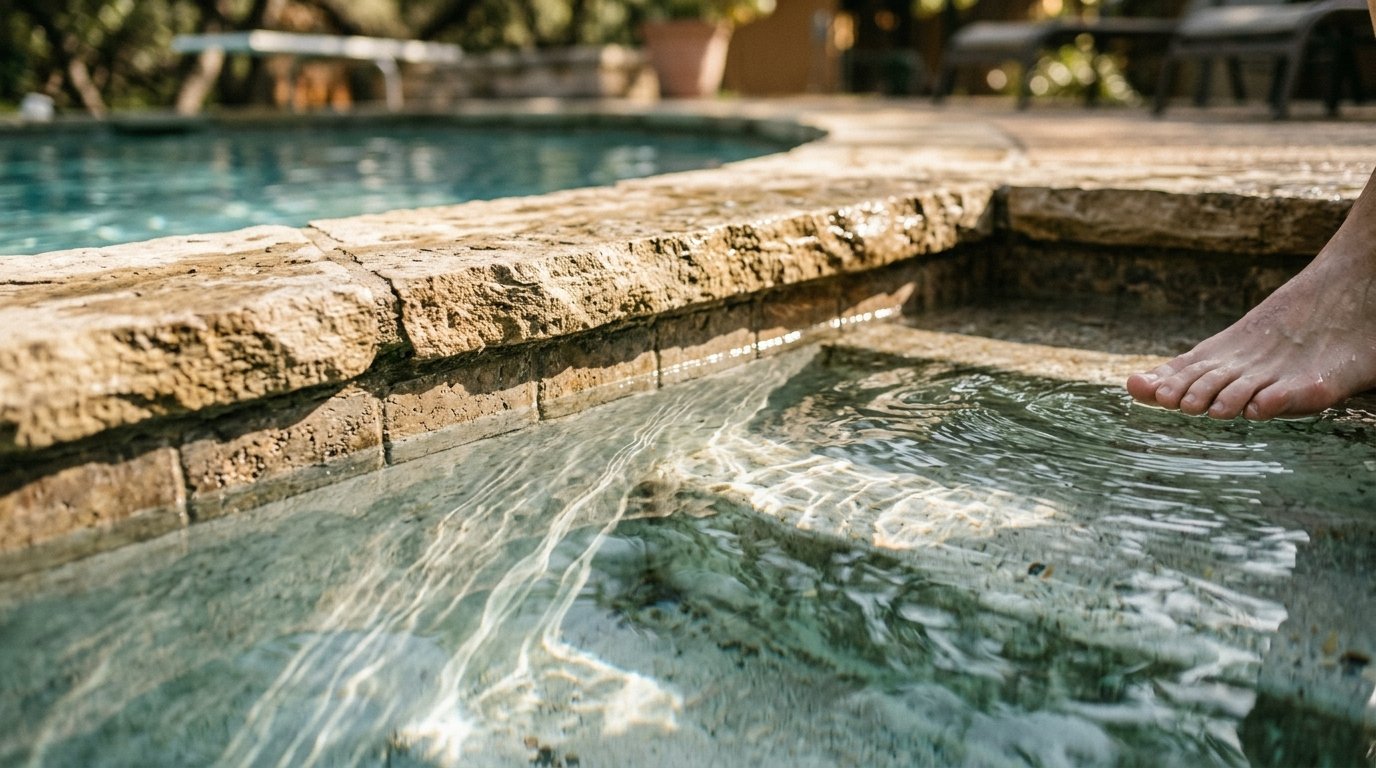
Here's the detail most visitors never ask about: Deep Eddy isn't on the city water system the way a hotel pool is. It's fed by two wells, one about 300 feet deep and one around 400 feet, and the water that comes up runs 68°F to 75°F year-round. That's cold enough that longtime regulars swim laps in it through winter.
Because the water turns over from those wells rather than recirculating through a chemical system, the pool runs unchlorinated — a claim the Deep Eddy Pool Foundation makes directly, and one that's unusual for a facility this size inside a major city. It's also why the pool has its own particular smell and clarity that a place like a suburban rec center doesn't: less like a chemical bath, more like cold groundwater, because that's what it is.
"Spring-fed" is the phrase you'll see on the city's own page and most local writeups. The more precise mechanism, per the pool's own history, is two deep wells rather than a single natural spring vent — worth knowing if you're the type of visitor who likes the exact answer, not just the poetic one.
How did a flood almost end it — and the WPA save it?
The City of Austin bought the property on May 31, 1935, for $10,000. Two weeks later, a flood on the Colorado River tore through the site, wrecked the existing buildings, and filled the new municipal pool with mud and debris. It could have ended there.
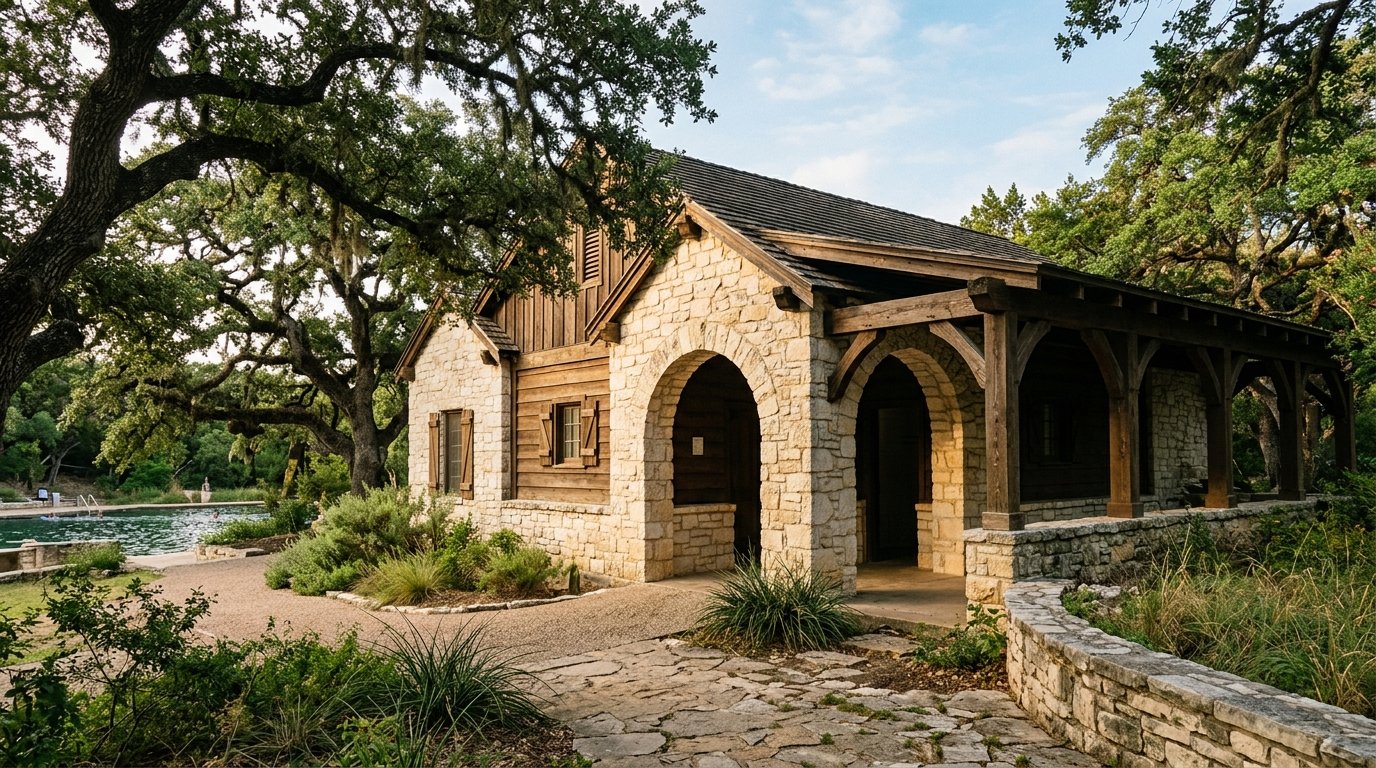
Instead, the Works Progress Administration rebuilt it. Architects Dan Driscoll and Delmar Groos designed a new bathhouse in the National Park Service's "rustic" style — the same limestone-and-timber look you'll recognize from other Depression-era Texas parks — and the pool reopened to the public in July 1936. That bathhouse is still standing and still in use. The whole site was added to the National Register of Historic Places on June 23, 2003.
Deep Eddy Pool
$5 adult (resident) / $9 adult (non-resident)What does it cost, and what are today's real hours?
The City of Austin's fee table, which covers Deep Eddy the same as Barton Springs, breaks down like this:
| Age group | Resident | Non-resident |
|---|---|---|
| Under 1 | Free | Free |
| Child (1–11) | $2 | $4 |
| Junior (12–17) | $3 | $5 |
| Adult (18–62) | $5 | $9 |
| Senior (62+) | $2 | $5 |
| Veterans (honorably discharged) | Free | Free |
A resident season pass runs $190 for an adult, $370 for a family of four, valid through October 31 with Zilker Park parking included where applicable — worth doing the math if you're planning more than about six visits this season.
What locals should know
- Today is not a Tuesday. The pool is open; Tuesdays are the one day it closes for cleaning and maintenance.
- Parking is genuinely tight. The lot is small. Street parking on Deep Eddy Ave and the surrounding Tarrytown blocks fills up by mid-morning on a hot day; the Lady Bird Lake Hike-and-Bike Trail runs close enough that biking or walking in is a real option, not just a suggestion.
- It's colder than Barton Springs feels warmer, if that makes sense — both draw from underground water in the high-60s to low-70s range, but Deep Eddy's smaller, more enclosed footprint means less sun-warmed shallow water to wade through before you're all the way in.
- Bring cash or a card for the gate; there's no online reservation system the way some newer Austin attractions run.
This is a working city pool, not a themed attraction — no lazy river, no snack bar beyond vending machines, and the shallow end still gets crowded with kids by early afternoon on a 100°+ day. Come for lap swim at 8 AM if you want it closer to quiet.
Is it worth the trip?
For more of this week's heat-relief options, see where the Greenbelt actually has water right now and the city's full list of cooling centers if a pool day isn't in the cards. If Deep Eddy is packed, McKinney Falls' day-pass system is the next-closest real alternative. And if a WPA-era build is your kind of story, Austin's last 17 moonlight towers are the other piece of century-old infrastructure still doing its original job after dark.
FAQ
Is Deep Eddy Pool chlorinated? No. It's fed by two wells (roughly 300 and 400 feet deep) rather than the municipal water system, and the water turns over instead of recirculating through chlorine — a detail confirmed directly by the Deep Eddy Pool Foundation's own history page.
How cold is Deep Eddy Pool? The water runs 68°F to 75°F year-round, according to the pool's own historical account — noticeably colder than the air on most Austin days, and colder than a typical chlorinated pool that sits closer to 78–82°F.
Is Deep Eddy Pool really the oldest pool in Texas? Yes, per the City of Austin Parks and Recreation Department: the concrete pool was built in 1915–1916, making it the oldest swimming pool still operating in the state.
What does it cost to swim at Deep Eddy Pool? As of the City of Austin's current fee table, $5 for a resident adult (18–62) and $9 for a non-resident adult; children, seniors, and veterans pay less or swim free. See the full table above.
What day is Deep Eddy Pool closed? Tuesdays, for cleaning and maintenance, through the 2026 season (open through October 31).
Related Austin Data
More Austin Guides
Share this article