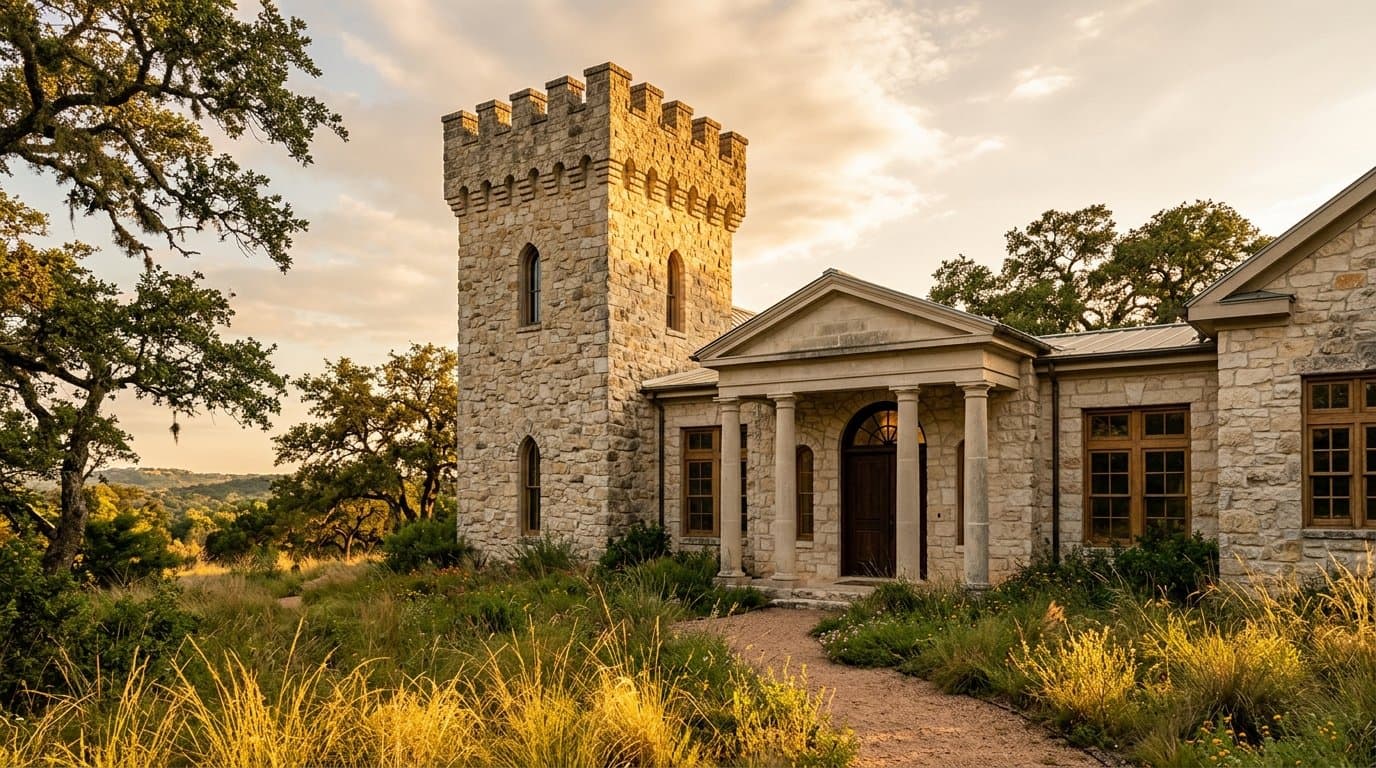
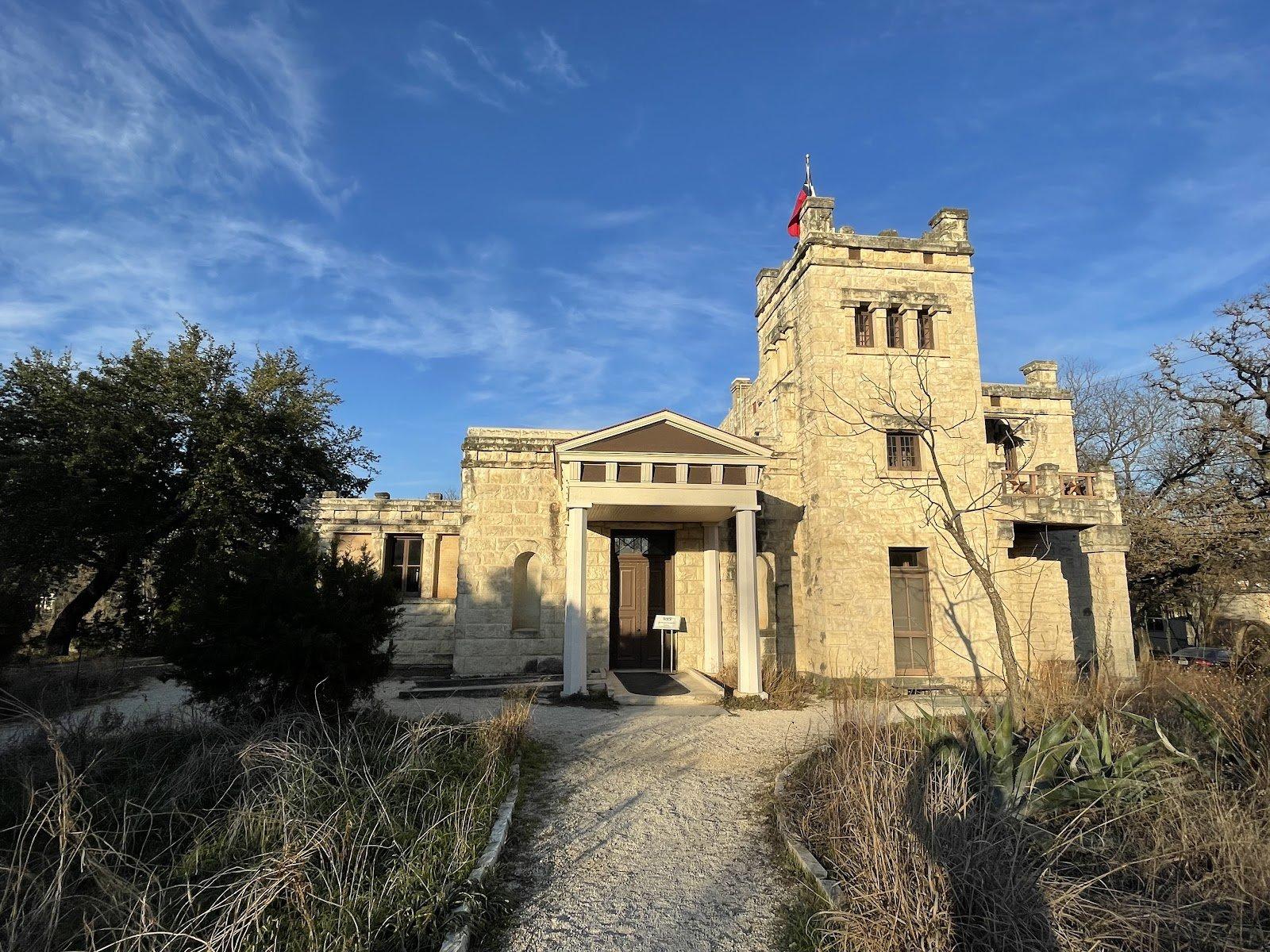
Elisabet Ney built Austin's only castle out of native limestone, sculpted the two marble statues that greet visitors in the Texas Capitol's south foyer, and refused to use her own husband's name until the day she died. According to ATX Things analysis of city records and the museum's own archives, her Hyde Park studio — the state's first dedicated art museum — has been closed for renovation since December 2024 and won't reopen until spring 2027. This Sunday, though, her legacy makes a rare public appearance across town at Laguna Gloria, free, as part of Austin Museum Day.
Who Was Elisabet Ney, and Why Did She Build a Castle in Hyde Park?
Elisabet Ney was born in 1833 in Münster, Prussia, the daughter of a stonemason. When her parents refused to let her study art, she went on a hunger strike for weeks until they gave in — and in 1852 she became the first woman admitted to the Munich Academy of Art. She went on to sculpt some of 19th-century Europe's biggest names from life: the philosopher Arthur Schopenhauer, the fairy-tale collector Jacob Grimm, the Italian general Giuseppe Garibaldi, the composer Richard Wagner, and King Ludwig II of Bavaria.
In 1863 she married the Scottish scientist and philosopher Edmund Montgomery at the British consulate on the Portuguese island of Madeira — then spent the rest of her life insisting, in public and often in print, that she wasn't really married at all. She never took his name. She wore men's trousers and boots she cut herself, rode her horses astride instead of sidesaddle, and had little patience for anyone who assumed otherwise about what a 19th-century woman owed a household.
"Women are fools to be bothered with housework. Look at me; I sleep in a hammock which requires no making up. I break an egg and sip it raw. I make lemonade in a glass, and then rinse it, and my housework is done for the day.
The couple eventually settled at Liendo Plantation near Hempstead, where Ney ran the farm for two decades while Montgomery pursued his research. In the early 1880s, Texas Gov. Oran M. Roberts invited her to Austin, and her sculpting career picked back up. In 1892 she built a limestone studio in what's now the Hyde Park Historic District and named it Formosa — Portuguese for "beautiful," after the wedding-day studio Montgomery had built her on Madeira nearly 30 years earlier. She expanded it in 1902 with a tower where Montgomery wrote and a roof where Ney herself slept most nights, rain or shine.
What Happened to the Statues She Made of Sam Houston and Stephen F. Austin?
In 1891, the Texas Legislature put up $32,000 for Ney to sculpt Sam Houston and Stephen F. Austin for the Chicago World's Fair — she missed the fair's deadline, but the finished marble statues found an even bigger stage. One set stands today in the south foyer of the Texas State Capitol. A second set represents Texas in the National Statuary Hall Collection inside the U.S. Capitol in Washington, D.C., making Ney the first sculptor to place two statues from the same state in that collection. She carved both men as young frontiersmen rather than the elder statesmen Austin remembered, and worked from the real artifacts — Houston's own sword, Austin's own Kentucky rifle — to get the details right.
She kept working into her 70s: a tomb monument for Albert Sidney Johnston at the Texas State Cemetery, a plaster Lady Macbeth whose finished marble now lives at the Smithsonian American Art Museum, portrait busts of Texans and visiting dignitaries. Months before she died in 1907, she testified before the Texas Legislature in favor of a women's suffrage bill. It failed. She died in her Formosa studio that June, and is buried beside Montgomery at Liendo Plantation.
Why Is the Elisabet Ney Museum Closed Right Now?
The Elisabet Ney Museum at 304 E 44th St has been closed for renovation since Dec. 30, 2024. The City of Austin's Parks and Recreation Department, which has run the site since 1941, says it expects to reopen in spring 2027.
After Ney's death, her friends preserved Formosa exactly as she'd left it and, in 1911, founded the Texas Fine Arts Association in her honor — the organization that, more than a century later and after several name changes, is now The Contemporary Austin. The building earned a spot on the National Register of Historic Places and joined the National Trust for Historic Preservation's Historic Artists' Homes and Studios program. Its collection of busts, statues and personal memorabilia is held jointly with the Harry Ransom Center at the University of Texas at Austin.
In a normal year, roughly 21,000 people walk through Formosa's limestone rooms. Right now the current renovation covers both the 1892-and-1902 building itself and a landscape rehabilitation of the surrounding 2.5 acres, about half of which has been replanted as the native Blackland Prairie that covered the site when Ney arrived. Google's own listing for the museum currently shows it "temporarily closed" — worth knowing before you drive to Hyde Park expecting the doors to be open.
Where Can You See Her Legacy This Weekend?
The Ney doesn't reopen for another year and a half, but it isn't sitting the season out. This Sunday, Sept. 20, from noon to 3 p.m., the museum is setting up a pop-up at The Contemporary Austin's Laguna Gloria campus as part of the citywide Austin Museum Day — free admission, no ticket required for the Ney's own programming.
The Contemporary Austin – Laguna Gloria
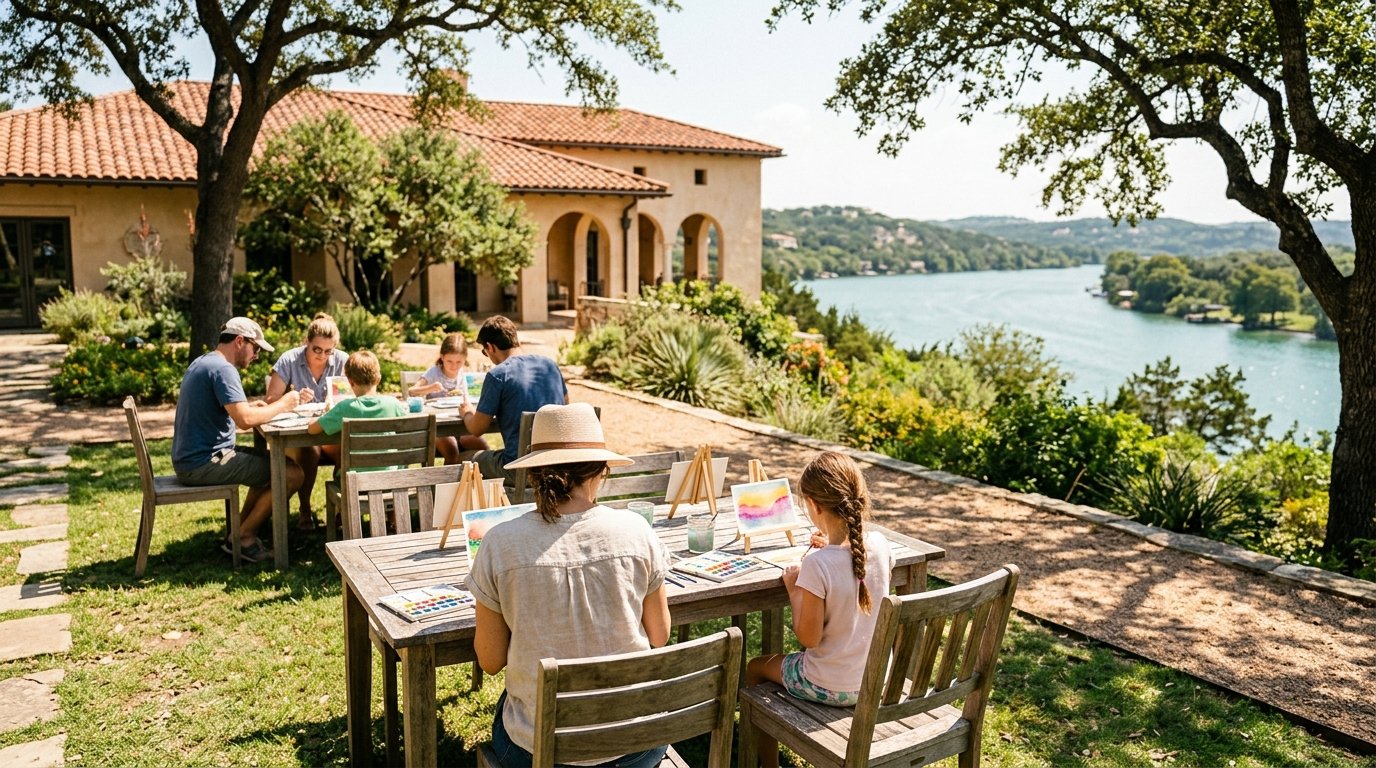
$The Ney's contribution runs from noon to 3 p.m. only: artist Virginia L. Montgomery's hands-on "Breaking the Mold Art Crate", built to explore art and nature through activities aimed at kids and adults alike, plus a screening of her short films and a chance to observe live moths brought in from the University of Texas Insect Collection. There's also plein air watercolor postcard painting on the grounds. It layers on top of Laguna Gloria's own new self-guided audio tour, "Listening to the Land," which traces the site's history from Indigenous peoples through early Austin socialites and Mormon settlers.
Parking at Laguna Gloria is limited and fills up fast on event days, according to recent visitor reviews — arrive close to noon, or be ready to use the street parking near the park entrance.
It's also worth knowing you're on the same soil as the organization Ney's own friends founded in her name. The Contemporary Austin traces its roots directly to that 1911 memorial association — meaning Sunday's event isn't a random pairing, it's the institution Ney's legacy built, hosting her legacy where she can't right now.
What Locals Should Know
- The Elisabet Ney Museum, 304 E 44th St in Hyde Park, is closed for renovation through spring 2027 — don't make the drive expecting an open door.
- Sunday, Sept. 20, noon–3 p.m., The Contemporary Austin's Laguna Gloria (3809 W 35th St) hosts the Ney's Austin Museum Day pop-up, free, alongside 30-plus other participating museums citywide.
- The marble statues Ney is best known for — Sam Houston and Stephen F. Austin — are on permanent public view year-round in the Texas Capitol's south foyer, no ticket needed, if you want to see her actual sculpture work sooner than Sunday.
- Parking at Laguna Gloria is tight; the earlier you arrive, the better your odds.
FAQ
Is the Elisabet Ney Museum open in 2026? No. It's been closed for renovation since Dec. 30, 2024, and the City of Austin expects it to reopen in spring 2027.
Where can I see Elisabet Ney's work while the museum is closed? Her marble statues of Sam Houston and Stephen F. Austin stand in the south foyer of the Texas State Capitol, free and open during Capitol hours. This Sunday, Sept. 20, her museum also runs a free pop-up at Laguna Gloria for Austin Museum Day.
Is Austin Museum Day free? Yes — it's a once-a-year, citywide event with free admission at 30-plus participating museums, this year on Sunday, Sept. 20.
Who was Elisabet Ney? A German-born sculptor (1833–1907) who trained in Munich and Berlin, sculpted European figures including Bismarck and Wagner, then moved to Texas and built her Formosa studio in Austin's Hyde Park in 1892. Her friends founded a memorial arts association in her honor after her 1907 death that eventually became The Contemporary Austin.
If you've never made it to Formosa, spring 2027 is the next real chance — but Sunday's Laguna Gloria pop-up is the closest thing to it until then. Ney isn't the only piece of Old Austin still hiding in plain sight: read about the tree a man tried to kill with a love spell, the last gas-lit street lamps in the world, and the two free, air-conditioned museums almost nobody visits downtown. We'll be watching for the museum's reopening date; follow @austintexasthings for the update.
Related Austin Data
Share this article