If you're about to tour a house in Hyde Park, Austin's oldest planned neighborhood, a handful of public records will tell you more than the open house will. According to ATX Things analysis of the Zabalist public-records database — the same records layer behind our sister site Austin Local Team's Hyde Park neighborhood page — recent filings in the 78751 ZIP include a brand-new two-family rebuild, a six-figure porch-and-stairwell addition, and a 2026 bathroom remodel that had to formally reopen a permit first filed back in 2011.
None of that shows up on a listing sheet. Here's where to find it, and what it actually tells you, using Hyde Park's own filings as the example.
Why Hyde Park's records go back further than most
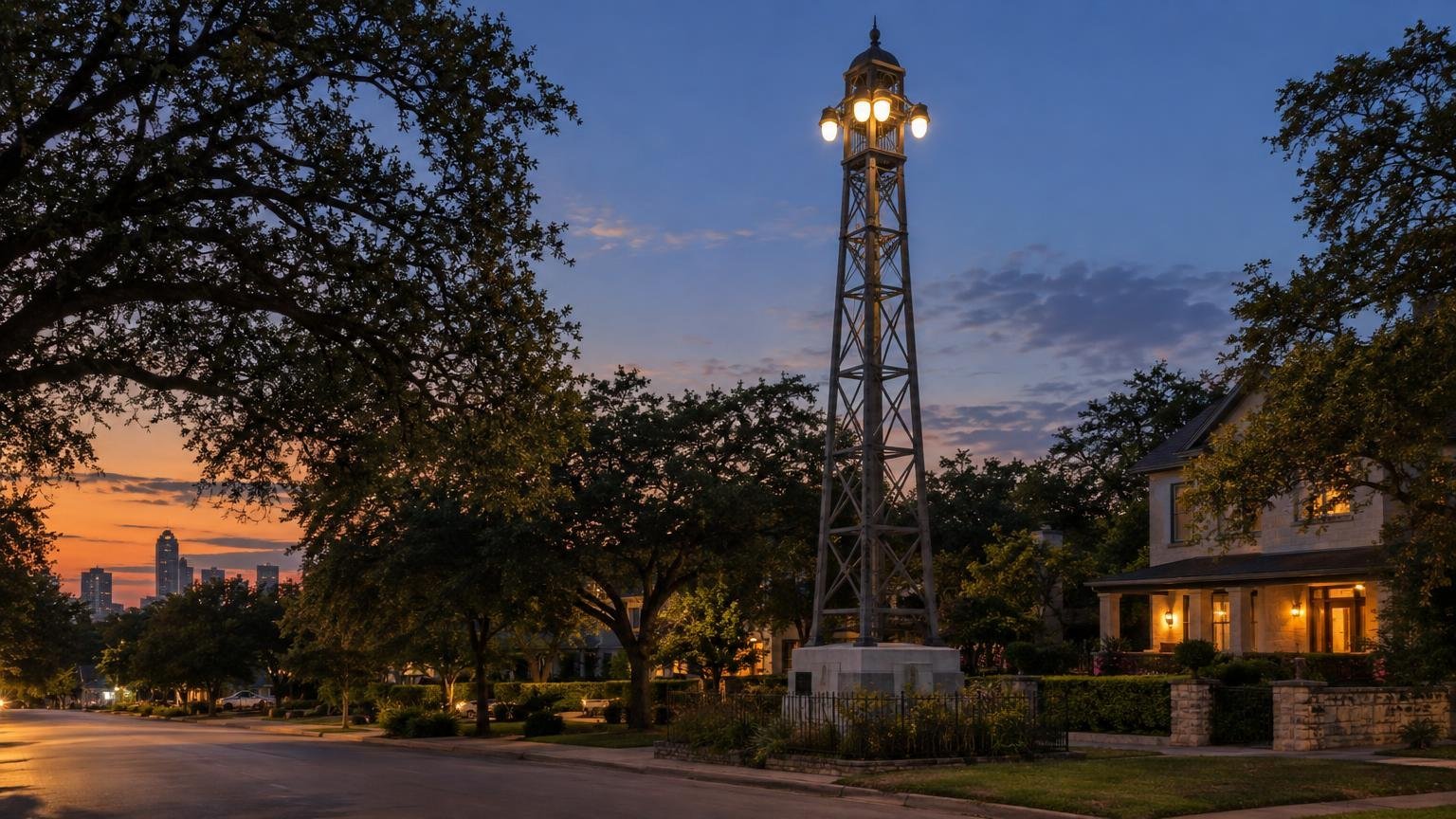
Hyde Park isn't just old — it's Austin's first planned subdivision, which means its permit history has more decades to search than most neighborhoods built after World War II. Col. Monroe Shipe bought the original 206.25-acre tract on May 13, 1890, filed the first subdivision with Travis County on January 3, 1891, and ran the city's first electric trolley from Congress Avenue up to Hyde Park on February 26, 1891 — marketed from day one as "Austin's first streetcar suburb," according to the Hyde Park Neighborhood Association's own timeline. One of Shipe's original moonlight towers, lit for the first time in May 1895, still stands on Speedway.
Most of South Hyde Park has carried a local historic district designation since December 26, 2010 — ten days after Austin City Council passed it — and roughly three-quarters of its structures are "contributing," meaning they're at least 50 years old and built inside the district's period of significance, per the neighborhood association. That history is exactly why a records check matters more here than in a newer subdivision: a 130-year-old lot has had more chances to accumulate permits, additions, repairs and the occasional lapsed one.
What's actually been filed recently
Pulling Hyde Park's filings from the same public-records database Austin Local Team's site uses, a few recent entries stand out as the kind of thing a buyer would want to see before, not after, making an offer:
| Address | What was filed | Status | Last activity | Valuation |
|---|---|---|---|---|
| 4513 Avenue B, Unit 2 | New construction: 2-story, 3-bed/2-bath two-family residential, covered front porch, uncovered balcony | Completed | Aug. 7, 2026 | Not listed |
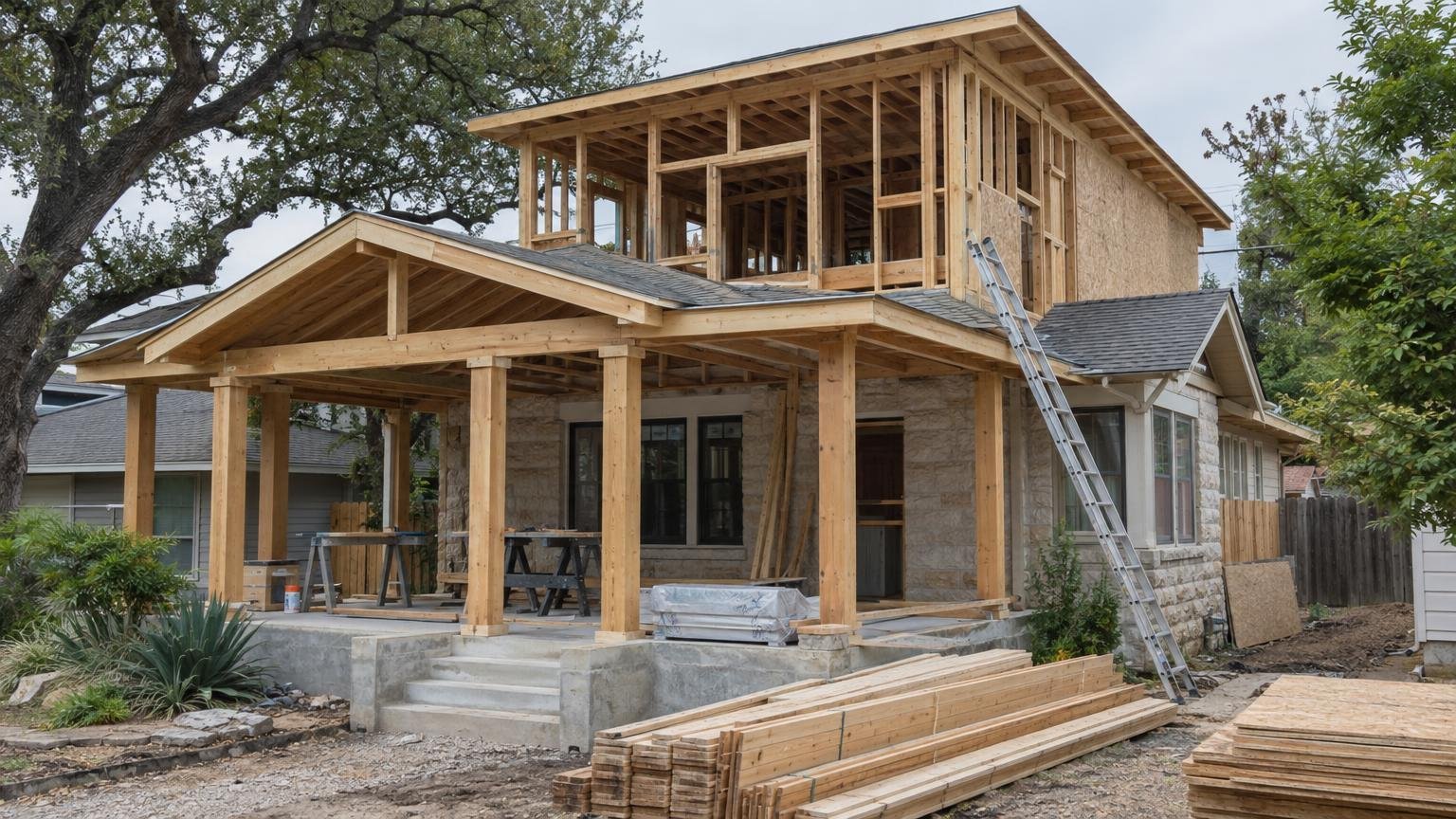
| 4103 Avenue F | Addition: first-floor porch/entry/stairwell plus a second-floor addition | Completed (life-safety inspection June 16, 2025) | Aug. 19, 2026 | $136,600 |
| 5107 Evans Ave | Bathroom remodel, filed as "rolling in" expired permit EP 2011-105068 | Completed | Aug. 3, 2026 | Not listed |
| 5406 Middle Fiskville Rd | Mixed-sector project, open since first filed in 2007 | Permitted | Sept. 9, 2026 | Not listed |
That third row is the one worth slowing down on. A 2026 permit that explicitly references and reopens a 2011 permit number means some work on that property sat unfinished, unpermitted, or unclosed for roughly 15 years before this year's remodel brought it current. That's not unusual — plenty of older homes carry at least one permit like it — but it's exactly the kind of detail you can only catch by pulling the property's full permit history, not by walking through it.
A permit with "rolling in" or "reinstating" an old permit number in its description is city-speak for "this property has unfinished business from a prior project." Ask the seller about it directly before you write an offer.
What else the records show for the area
Beyond individual permits, Hyde Park's public-records layer on Austin Local Team's site tracks several categories at the ZIP level that a buyer can check for any specific address inside it: building permits and new-construction counts, TABC licenses for the bars and restaurants nearby, food-establishment inspections, traffic crash counts, 311 service requests, code-compliance cases, FEMA floodplain status, and soil composition — all public filings, not conclusions about the area. As of this run, 3.6% of homes in Hyde Park sit inside a FEMA 1% annual-chance flood zone, and roughly a third of the neighborhood's soil is mapped as highly expansive clay — both facts worth asking a structural inspector about, not reasons to avoid or favor the neighborhood.
These are counts of public filings, not a verdict on any street, block or home. A crash count, a code case, or a flood-zone percentage describes what's recorded — it doesn't make a judgment about whether a place is safe, desirable or a good fit. That's for you and an inspector to decide after you've actually seen the records.
Daily permit data from City of Austin
How to check this before you tour, not after
- Pull the address's own permit history — not just what's active, but everything filed, including anything marked expired, reinstated, or "rolling in" an old number.
- Check the flood zone and soil layers, especially on anything built before the 1990s; expansive clay shows up as foundation cracking years later, not at closing.
- Look at what's been filed on the block, not just the house — a new two-family build next door, like the one on Avenue B above, changes what the street looks like in a year, regardless of what the house you're touring looks like today.
- Ask the seller directly about any lapsed or reopened permit you find — it's a normal question, and a seller with nothing to hide will usually have the paperwork.
See the same records around any listing
Austin Local Team is a sister site of Austin Texas Things — a home search built on this same public-records database, brokered by All City Real Estate, ltd. Co. (TREC #9003633). Its Hyde Park neighborhood page runs every one of the permit, flood, soil, crash, 311 and code layers above against the specific address you're looking at — not just the neighborhood average — alongside current listings. As of this run, Local Team publishes 134 neighborhood guides and 47 ZIP-code research pages across the metro, each built the same way: find the home, see the records around it.
The site makes no automated valuations and doesn't rank or score neighborhoods — you still need your own inspector and your own judgment. What it saves you is the hour of separately digging through city permit portals, FEMA maps and TDLR filings before you've even scheduled a showing.
FAQ
Is Hyde Park's local historic district the same as its National Register listing? They're related but separate. The local historic district (most of South Hyde Park) took effect Dec. 26, 2010, under Austin City Council — it's what actually governs exterior changes and demolitions today. A National Register listing is a federal recognition with different legal weight; check with the Austin Historic Preservation Office for a specific address's exact status before planning any exterior work.
Does a "contributing structure" designation restrict what I can do to the house? It can. The neighborhood association estimates roughly 75% of structures in the historic district are contributing (50+ years old, built in the period of significance), which typically means exterior changes go through a city review process. Confirm a specific property's status and any restrictions with the city before buying with renovation plans.
Where do I find a property's full permit history myself, without a real-estate tool? The City of Austin's permit search and TDLR's project database are both public; Zabalist.com, the public home of the records this desk reports from, lets you search by address directly.
What does "rolling in an expired permit" actually mean for a buyer? It means a newer permit formally reopened and closed out an old, unfinished one. It's not automatically a red flag, but it's worth asking the seller what the original 2011 work was and why it took until 2026 to close.
Is any of this a reason to avoid Hyde Park? No — every Austin neighborhood this old carries a similar record of permits, repairs and the occasional lapsed filing. The point isn't to rule a neighborhood in or out; it's to know what you're buying before you're the one who has to close out someone else's old permit.
We track these filings the same way across every Austin neighborhood — see what's been filed in Mueller or read the citywide checklist before your next showing, wherever it is.
Related Austin Data
More Austin Guides
Share this article