Austin’s I‑35 Cap & Stitch: What Changes Downtown, What’s at Risk, and Why May 2026 Matters
DOWNTOWN
Interactive map with permits, restaurants, bars & development data
Austin’s I‑35 Cap & Stitch project isn’t just a highway upgrade — it’s a once‑in‑a‑generation attempt to physically reconnect East and West Austin.
But as of April 6, 2026, the clock is ticking.
May 2026 is the key deadline for City Council to commit funding if Austin wants major cap decks included in TxDOT’s primary construction bid.
Here’s the real story behind the May 2026 funding deadline, what construction will actually look like on the ground, how Lady Bird Lake access will change, and where the city’s vision could shrink — or expand.
The Big Picture: What “Cap & Stitch” Actually Means
The Cap & Stitch initiative is separate from — but dependent on — TxDOT’s $4.5–$4.9 billion I‑35 Capital Express Central expansion through downtown Austin, outlined on the agency’s official Capital Express Central project page.
TxDOT’s project will:
- Remove the aging double‑deck section between Airport Boulevard and MLK Jr. Boulevard
- Lower and widen the main lanes
- Rebuild bridges, including the Lady Bird Lake crossings
Austin’s Cap & Stitch plan — part of the city’s broader Our Future 35 framework — would then build structural “decks” over portions of the lowered highway, creating new parks, plazas, and pedestrian corridors that reconnect downtown with East Austin.
Think of TxDOT’s project as the structural rebuild — and Cap & Stitch as the city’s opportunity to redesign the space above it.
If executed as envisioned, this would be the most significant urban design shift along I‑35 since the freeway replaced East Avenue decades ago.
The Deadline That Matters: May 2026
City officials face an advanced commitment deadline from TxDOT.
According to the City of Austin’s official Cap & Stitch Council FAQ, May 2026 is the key deadline for City Council to commit funding for any horizontal cap decks to be included in TxDOT’s ultimate construction bid package.
Translation: The city must decide soon how ambitious it wants this project to be — and how much local money it is willing to put on the line.
Watch City Council agendas between April and June 2026. If you see specific dollar amounts tied to “horizontal caps,” that’s the clearest signal of how bold Austin intends to be.
This is not a settled project. It’s an evolving negotiation shaped by design coordination, construction sequencing, and funding strategy.
What’s Already Moving on the Ground
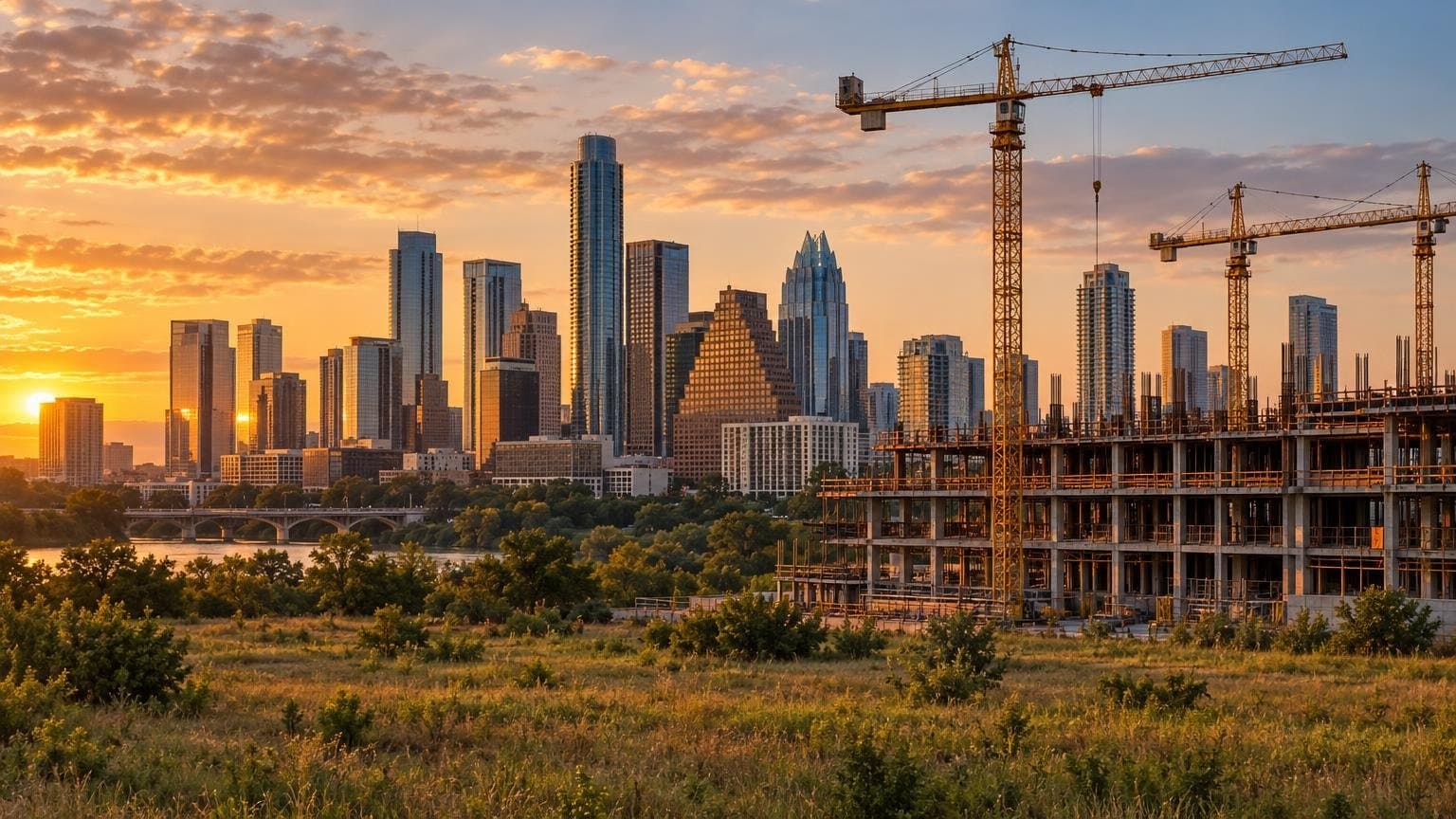
TxDOT is advancing the Capital Express Central project, part of the broader 79‑mile regional overhaul under the state’s MyMobility35 initiative.
Key facts:
- The broader Capital Express Central corridor spans roughly 8 miles through central Austin
- Main construction activity is ramping up in phases through 2026
- The I‑35 bridges over Lady Bird Lake are scheduled for reconstruction as part of the project
Expect extended lane shifts, nighttime closures, and periodic downtown exit reconfigurations through at least 2027.
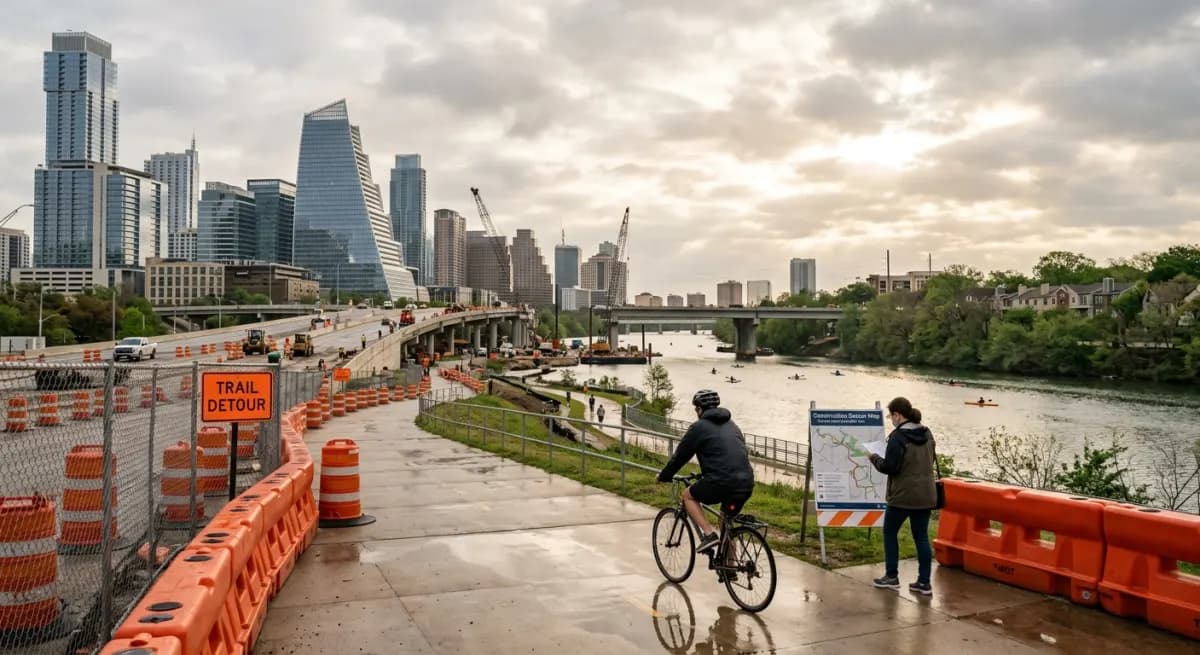
Trail users should expect continued detours and intermittent closures near the Butler Hike‑and‑Bike Trail corridor as staging progresses.
Access around Auditorium Shores and the lakefront will evolve in phases — not one big shutdown, but rolling changes over several years.
If you’re planning waterfront time this spring — especially around Auditorium Shores — access patterns near the lake are evolving and will continue to shift over the next several years.
The $69 Million “Stitch” Move
In early 2026, Austin advanced a $69 million proposal to build two stitch structures along I‑35 as part of the broader Cap & Stitch effort.
These “stitches” are narrower connections — primarily pedestrian and bicycle‑focused — that can be delivered more affordably than full park decks.
Design and engineering coordination for the broader program has involved international infrastructure firm Arup, which outlines the planning framework in its overview of Austin’s Cap & Stitch Program.
If funding tightens, expect the city to prioritize stitches first — they’re cheaper, politically easier, and faster to integrate into TxDOT’s base design.
Insider takeaway: If funding tightens, expect the city to prioritize stitches first, with larger park caps potentially phased later.
The Funding Wildcard
The Cap & Stitch vision relies on a mix of local, state, and anticipated federal funding.
The Downtown Austin Alliance’s Our Future 35 advocacy hub outlines the economic and community case for full deck build‑out, including long‑term tax base and mobility benefits.
But transportation funding volatility nationwide has created uncertainty for large‑scale cap projects. That uncertainty is why council votes have slowed and why you’re seeing more cautious language in recent briefings.
If federal infrastructure allocations shift in late 2026 or 2027, future cap phases could become significantly harder to finance.
What the Park Decks Could Deliver
If fully realized, downtown cap decks could create:
- New public plazas between Cesar Chavez and 4th Street
- Expanded east‑west pedestrian corridors
- Additional shared‑use paths linking into the citywide trail network
The impact wouldn’t just be aesthetic.
Urban cap projects in peer cities have historically:
- Increased walkability and retail activation
- Improved property values along formerly divided corridors
- Reduced the psychological “freeway barrier” effect
For context, projects of this scale can fundamentally reshape how residents move between districts — similar to how major mixed‑use redevelopments have transformed other parts of Austin in the past decade.
East Austin Perspective: The Equity Question
I‑35 has long marked a racial and economic dividing line in Austin.
Cap & Stitch is often framed by city leaders as a way to partially repair that historic harm — reconnecting communities that were split when East Avenue became I‑35.
But critics argue that without strong anti‑displacement policy, new park space could accelerate property value pressure in adjacent neighborhoods.
"Infrastructure can reconnect streets — but without housing protections, it can also accelerate who gets to stay.
Infrastructure alone doesn’t guarantee equity. Policy does.
What Happens If Council Scales Back?
If Austin fails to commit funding within TxDOT’s window:
- Horizontal decks may not be included in the main construction package
- Future additions could cost significantly more
- The opportunity to integrate caps seamlessly into the highway rebuild could narrow
This spring and early summer of 2026 represent a rare leverage moment. Miss it, and the city’s options become more limited — and more expensive.
The Real Timeline (As of April 2026)
Based on current public agency updates:
- Capital Express Central construction activity is ramping through 2026 under TxDOT’s official project schedule
- Funding commitment for cap decks faces a May 2026 decision point tied to inclusion in the state bid package
- Full corridor completion stretches into the early 2030s
This is a long game.
Insider Intelligence: What to Watch Next
- City Council agendas in April–June 2026 — funding language will reveal whether the full deck vision survives.
- Trail detour expansions near Lady Bird Lake — early indicators of bridge reconstruction acceleration.
- Budget reallocations tied to major civic projects like the Convention Center rebuild — competing priorities matter.
If Cap & Stitch moves forward at scale, it will redefine downtown Austin’s geography.
If it shrinks, we may get connective “stitches” — but not the transformative park canopy once envisioned.
Either way, the decisions made between now and late 2026 will shape Austin’s skyline, walkability, and east‑west identity for decades.
We’ll be tracking every vote.
It’s not just about traffic.
It’s about what kind of city Austin chooses to be.
Related Austin Data
More Austin Guides
Share this article