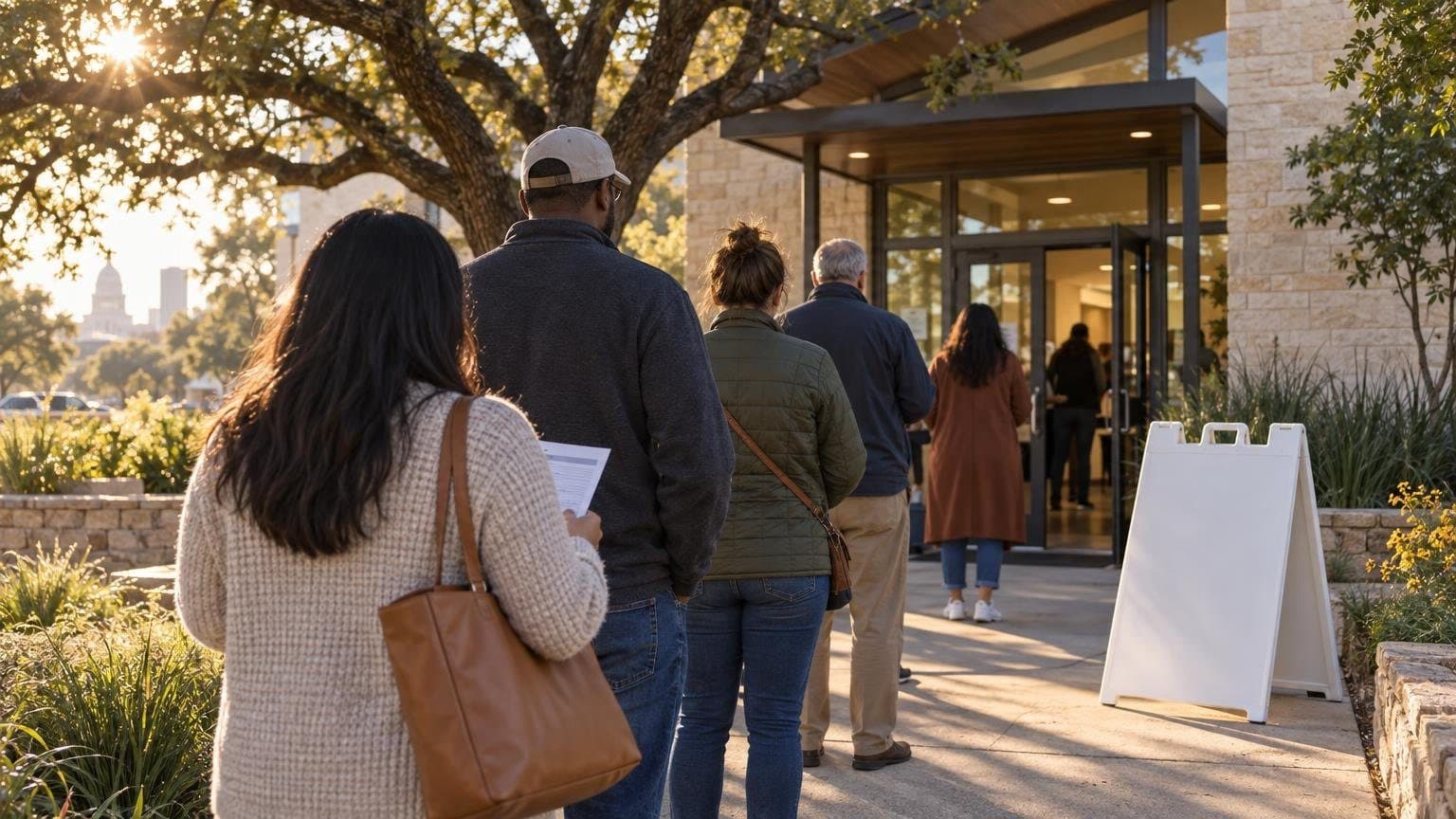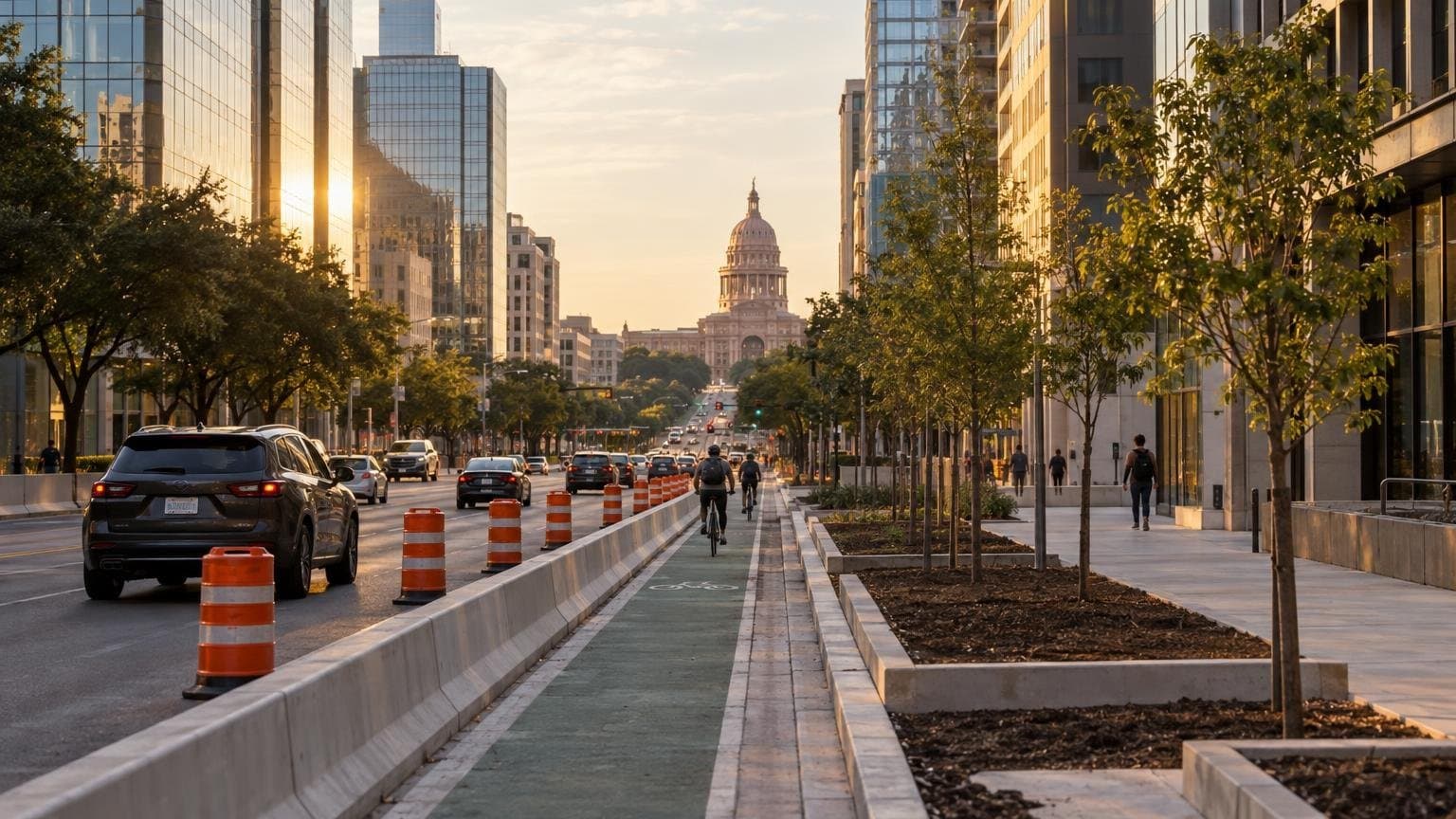
Austin, Texas has a new state filing for the next stretch of the Congress Avenue rebuild: a $1,615,000 project covering the 300 and 400 blocks, 3rd Street to 5th Street, registered Oct. 12, 2026 with a listed start of Oct. 1 and a finish of March 31, 2027. The city is the owner. The work is sidewalks, bike lanes, landscaping, curb ramps and signal changes, according to the filing on the Texas Department of Licensing and Regulation's accessibility-project database.
According to ATX Things' read of the filing and the city's own project pages, this is the middle of a longer job. The first funded phase runs from Cesar Chavez Street to 7th Street and, per the city, finishes in summer 2027. Here is what is on the record, what isn't, and what it means if you walk, bike, drive or park around there after work.
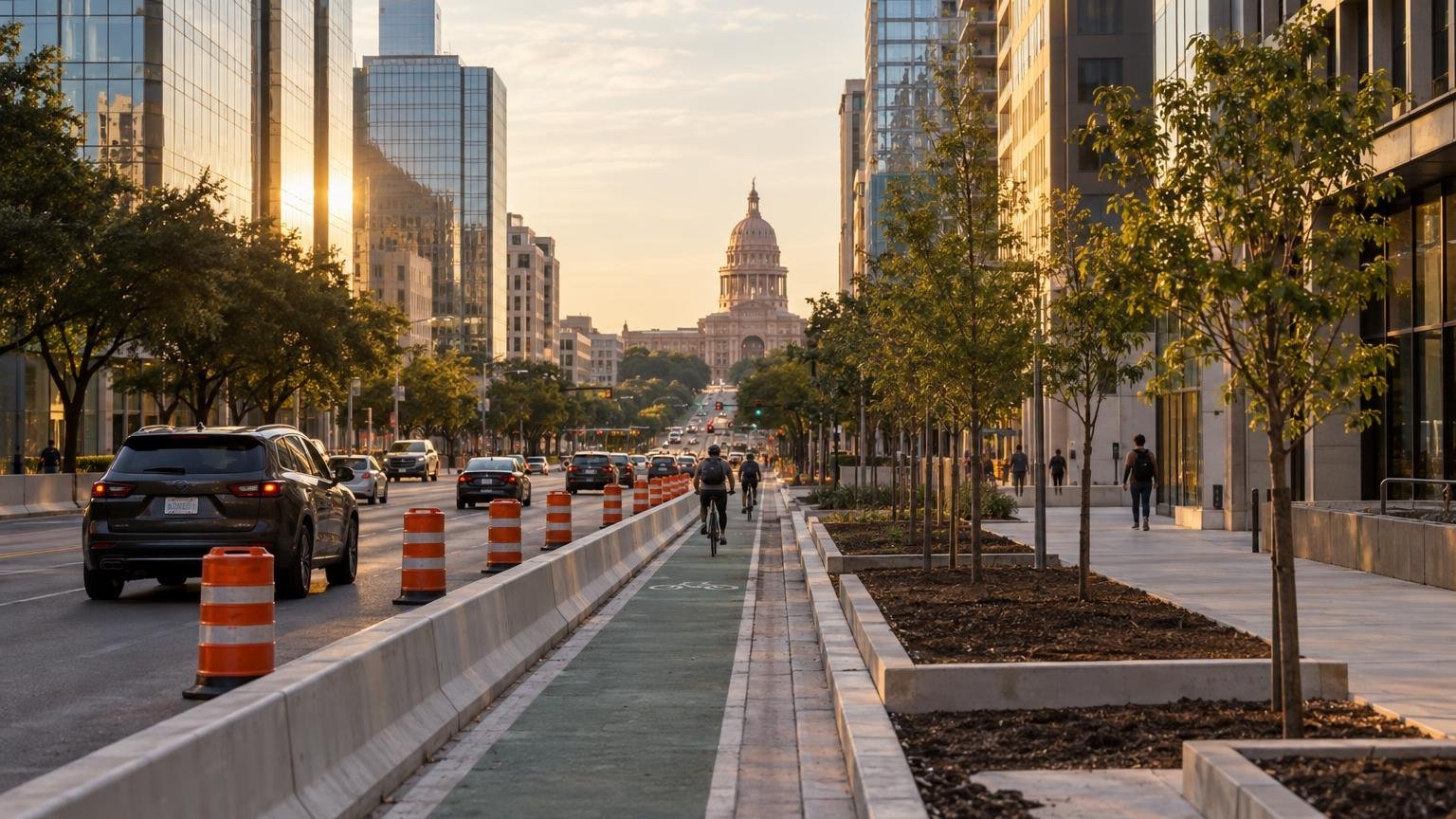
AI-generated illustration of the kind of street the plans describe. It is not a photograph of the finished blocks.
What exactly was filed for the 300 and 400 blocks?
The state's accessibility database (TDLR project TABS2027003333) lists the "Congress Avenue Urban Design Initiative (CAUDI), Congress Ave 300 & 400 Blocks (3rd St. to 5th St.)." The details as recorded:
| Field | What the filing says |
|---|---|
| Registered | Oct. 12, 2026 |
| Owner | City of Austin |
| Design firm | HDR Engineering, Inc. |
| Estimated cost | $1,615,000 |
| Listed start / completion | Oct. 1, 2026 / March 31, 2027 |
| Scope | Sidewalk, bicycle lane, landscape, ADA ramps, signal modifications, pavement marking and signing |
| Funding | Public funds, public land, or federally funded roadway |
| Status | Project Registered |
Source: Texas Department of Licensing and Regulation, project TABS2027003333, read Oct. 13, 2026.
A registration is paperwork the owner files so the work can be reviewed for accessibility. It isn't a construction update. The listed start date of Oct. 1 is a projected date on a form filed Oct. 12, and the filing doesn't say whether crews are already on the 300 and 400 blocks. We haven't walked the blocks, so we can't tell you where the barrels are today.
This is the third filing in a series
The same database shows the city has registered the Congress project in pieces. Matching titles in our Zabalist copy of the TDLR records, as of Oct. 13:
| Filed | Title on the filing | Estimated cost | Listed dates |
|---|---|---|---|
| Feb. 10, 2026 | Congress Avenue Urban Design Initiative (no block named) | $1,390,000 | Jan. 30 – April 30, 2026 |
| May 4, 2026 | 200 Block (2nd St. to 3rd St.) | $529,890 | June 1 – Aug. 31, 2026 |
| Oct. 12, 2026 | 300 & 400 Blocks (3rd St. to 5th St.) | $1,615,000 | Oct. 1, 2026 – March 31, 2027 |
We are not adding those up. The February filing doesn't name a block, and the city hasn't said these three filings are the whole project budget. What the table does show is the rhythm: the city files, then builds one stretch at a time, starting at the river and moving north.
That matches how the city describes it. Its project page says construction goes block by block and that the first phase is paid for by the 2020 Mobility Bond. The Downtown Austin Alliance, which has worked on the plan with the city, lists the first phase as Cesar Chavez Street to 7th Street, with construction running January 2026 through summer 2027.
What changes on the 300 and 400 blocks?
The city's project page describes both blocks the same way. Parking bays on the east and west sides get converted to pedestrian space, intended for dining, shopping and other street life. A concrete barrier replaces the current flex posts and rubber curb stops along the bike lane. New planting areas widen the soil around trees. Accessible parking spaces stay where they are or move slightly.
For day-to-day closures, text ATX CONSTRUCTION to 512-890-3099. Both the city's project page and the Downtown Austin Alliance point to that number for updates. The Alliance also lists a small-business grant for construction relief on its project page, which is worth knowing if you run a shop on the avenue.
The 300 block's plans also note that the changes are designed to fit the future Project Connect rail alignment on 3rd Street. The city describes the rail piece as future, and nothing in the Congress filing says when it starts.
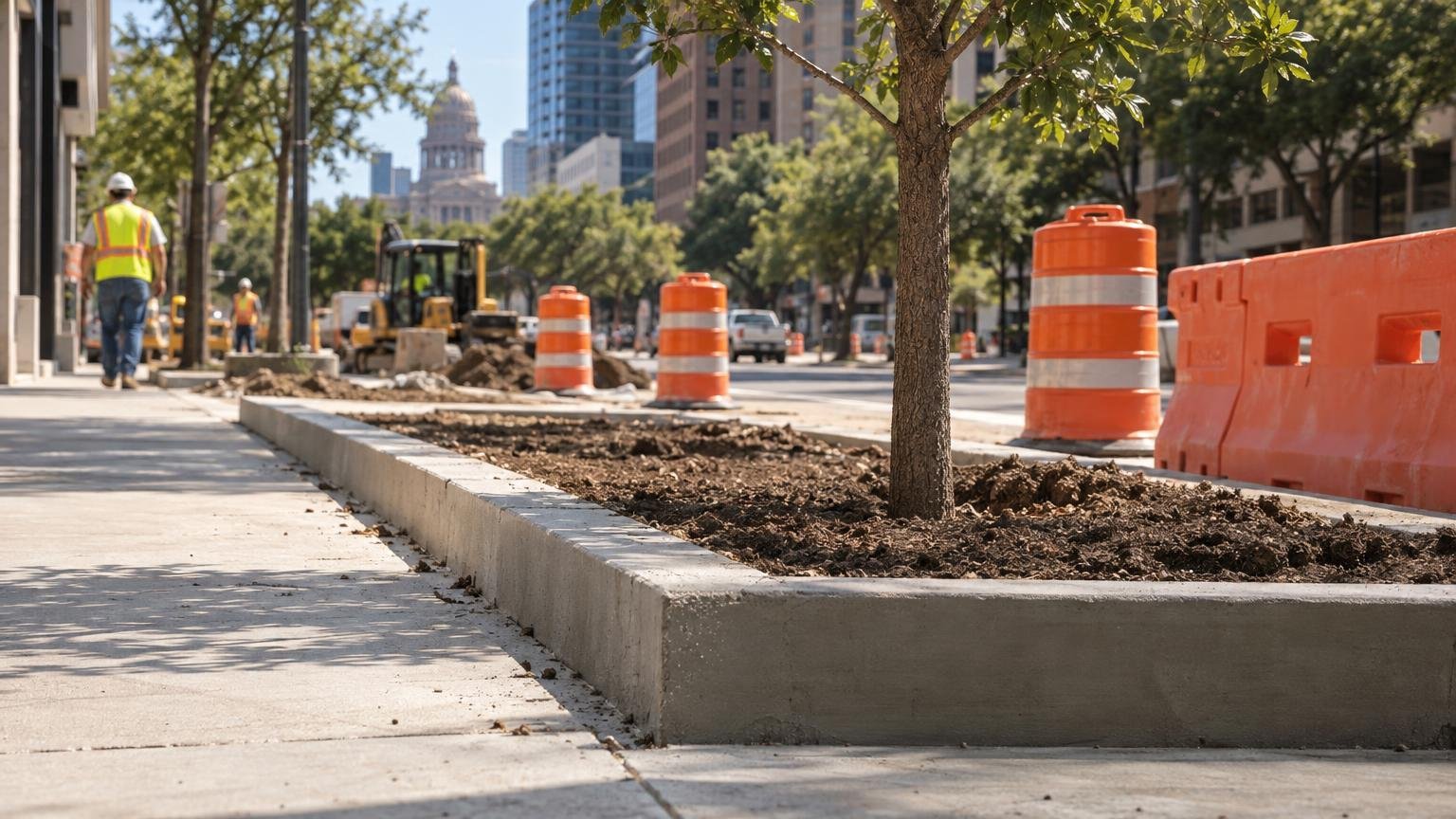
AI-generated illustration of a sidewalk tree bed under construction. Not a photo of Congress Avenue.
How much parking disappears?
The city's own number, for the whole first phase: converting on-street parking to pedestrian space between Cesar Chavez and 7th would remove about 37 spaces. The city's project page puts that at roughly 0.1% of publicly available parking downtown and 0.6% of on-street parking, using a 2018 study by Nelson Nygaard that counted about 71,500 parking spaces downtown, of which about 34,000 are open to the public all day.
Those figures belong to the city and to that 2018 count. We haven't re-counted. Treat them as the city's argument, not ours. The city also says it kept two parallel parking pockets on the west curb of the 200 and 600 blocks for ride-share and drop-off, and that some business owners raised parking concerns during the engagement round in late 2024 and early 2025.
The city says it has a signage-based wayfinding program to steer downtown visitors toward public garages, side streets and lots.
What about lanes and turns?
Two restrictions are on the city's construction page as of today, and neither is specific to the 300 and 400 blocks:
- One vehicle lane on Congress Avenue is closed throughout the construction period.
- 2nd Street: westbound traffic between Congress and Brazos Street is closed except to local traffic during phase 1, and later phases prohibit left turns for southbound traffic on Congress at 2nd Street.
The city says there are no wholesale closures of the avenue planned. Pedestrian access and business access stay open, and the occasional overnight work that does need a full block closed is meant for quieter nights outside special events.
When we read it on Oct. 13, the city's construction-update StoryMap still listed the 200 block as the one under construction (July to September), with the west side of the 300 block coming up next. It said nothing yet about the 400 block's schedule, so it may be behind the filing. Phasing "may change to accommodate unforeseen circumstances or special events," per the city. Check the text-alert line before you plan around a specific closure.
Why the filing matters for the rest of the avenue
North of 7th Street, nothing is funded yet. The city says changes between 7th and 11th Street were deferred to a future, unfunded phase after the community feedback round. One idea it is still studying for those upper blocks is a "retail street" with one lane each way, on-street parking, a protected bike lane and a wider walkway. That is a study, not a plan.
So the 300 and 400 blocks are the part of the avenue where you will see the finished design first. If you want to follow the money, watch the same database. New Congress Avenue filings from the city show up there before anyone announces them. Private projects on the avenue appear in the same records: a Level 8 office buildout at 301 Congress, for example, was registered Sept. 18 with a $400,000 estimate. We haven't verified who the tenant is beyond what the filing lists.
What locals should know
- The start date is a projection. Oct. 1 is the date listed on a form filed Oct. 12.
- Pedestrian access stays open. That's the city's commitment during construction; we haven't seen the blocks ourselves.
- Bike lane users: the concrete barrier replacing the flex posts and rubber curb stops is the bikeway change the city describes for both blocks.
- Business owners: the Downtown Austin Alliance's construction-relief grant and the text-alert line are the two official channels we found.
- Earlier coverage: the avenue lost a lane to the Paramount Theatre restoration, which runs into 2027, and our Central District Plan field guide covers the longer planning context.
FAQ
How much is the Congress Avenue 300 and 400 block project?
The state filing registered Oct. 12, 2026 lists an estimated cost of $1,615,000 for the 300 and 400 blocks, 3rd Street to 5th Street. The owner is the City of Austin. Earlier filings for other parts of the same project carry separate estimates, and the city hasn't published a combined total we could verify.
When will Congress Avenue construction finish?
The city's project page says the first phase, Cesar Chavez Street to 7th Street, will be complete by summer 2027. The 300 and 400 block filing lists March 31, 2027 as its completion date. Phasing can change, according to the city.
Is Congress Avenue closed downtown?
No. The city says it doesn't expect to close Congress Avenue entirely. One vehicle lane is closed during construction, with short-term lane closures and detours, and access to buildings and businesses is maintained.
How do I get construction alerts?
Text ATX CONSTRUCTION to 512-890-3099. The city and the Downtown Austin Alliance both list that number for closure and construction updates.
What is the Congress Avenue Urban Design Initiative?
It's the city's plan to rebuild Congress Avenue as a street with wider pedestrian zones, protected bike lanes, healthier street trees and storefront space for dining and activity. The first funded phase comes from the 2020 Mobility Bond.
Sources
- Texas Department of Licensing and Regulation, project TABS2027003333, registered Oct. 12, 2026 (read Oct. 13).
- City of Austin Transportation and Public Works, Congress Avenue project page and its construction-updates StoryMap (read Oct. 13).
- Downtown Austin Alliance, Congress Avenue Urban Design Initiative and Closures & Construction (last updated by the Alliance July 13, 2026).
- Filing history from the TDLR records tracked at Zabalist projects, as of Oct. 13, 2026.
We'll update this piece if the city posts a 300 or 400 block schedule or a new filing appears. Follow @austintexasthings; this desk publishes twice a day on what's actually open, actually happening and worth the trip.
Related Austin Data
Share this article