Listen to this story 13:22
Jump to a section
Read aloud by an AI voice (ElevenLabs) from the story on this page, which is the full transcript. Tables and maps are summarized in the audio.
Quick answer: Before you tour a house in Bouldin Creek, in Austin, Texas, read the public records around it, not just the listing. According to ATX Things analysis of city and state records, nine City of Austin site-plan filings and a $12 million state registration on South Congress sit within half a mile of the neighborhood's center. Here's what each record layer tells you, and where to see them around any home.
Austin Local Team is a sister site of Austin Texas Things. Both draw on the same Zabalist public-records database. Austin Local Team is brokered by All City Real Estate, ltd. Co. (TREC #9003633). Its About page links the TREC Information About Brokerage Services and the Consumer Protection Notice.
A listing tells you about the house. The public record tells you what's around it: the filing at the corner, the planned rail station a few blocks away, the share of nearby homes inside a floodplain. Most of it is free, and you can read it in fifteen minutes before a Saturday showing.
Our worked example is Austin Local Team's Bouldin Creek guide, which we read on Oct. 27, 2026, plus our own pull of the same database. Every number below is a count of public filings, not a conclusion about a home, a street or the people who live there.
What is Austin Local Team, and what does it show?
Austin Local Team is a home search for homes for sale and for rent across Travis, Williamson, Hays, Bastrop and Caldwell counties. Listings come from Unlock MLS as distributed by MLS GRID, and you don't need an account to search. Its tagline: "Find the home. See the records around it."
Two parts of it are worth knowing even if you never search a listing there:
- Public records around every listing. Building permits, site plans, subdivision cases, development projects, TDLR state project registrations, food inspections, traffic crashes and 311 requests within 800 m (about half a mile), plus the FEMA flood zone, USGS geology and USDA soils. Each layer names its source and sync date.
- Neighborhood guides. As of Oct. 27, 2026, its neighborhoods page lists more than 4,200 neighborhood guides, most of them subdivisions and sections across the five counties, plus 133 field guides and area overviews, including City of Austin planning areas like Bouldin Creek. The site labels the footprints as approximate, built from recorded plats and listing locations. They aren't legal boundaries.
What's been filed near Bouldin Creek this year?
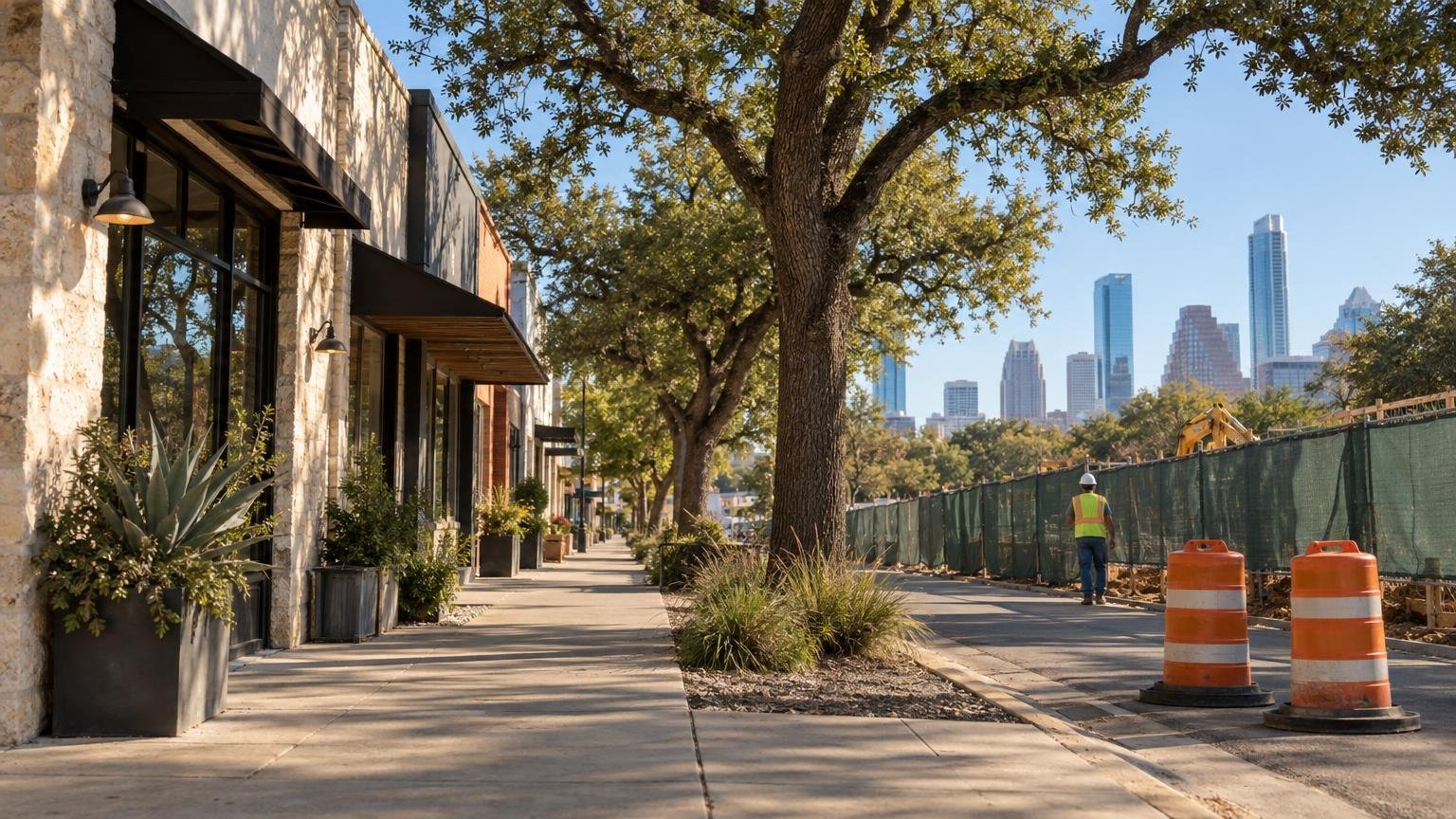
We pulled every City of Austin site plan with mapped coordinates within 800 m of the reference point Local Team uses for Bouldin Creek, filed between Oct. 27, 2025 and Oct. 26, 2026. There are nine filings at eight addresses:
| Filed | Filing (as named in the record) | Address | Status at last sync |
|---|---|---|---|
| Oct. 2, 2026 | Kido School | 1906 S 1st St | CC Pending |
| Aug. 24, 2026 | Arena Hall | 108 W Gibson St | In Review |
| Apr. 29, 2026 | Frontier Bank | 2104 S 1st St | Awaiting Update |
| Mar. 25, 2026 | 1000 and 1100 S 1st Street, Copeland North and South (two filings) | 602 and 605 Copeland St | Awaiting Update |
| Mar. 16, 2026 and Dec. 16, 2025 | 1612 South Congress (two filings) | 1612 S Congress Ave | In Review / Awaiting Update |
| Jan. 30, 2026 | Connie's Last Stand | 1403 S Congress Ave | Awaiting Update |
| Dec. 16, 2025 | 1207 S. 1st Street | 1207 S 1st St | Awaiting Update |
How to read the status column: "CC Pending" means the city's completeness check hasn't finished, the step before formal review. "Awaiting Update" means the city is waiting on the applicant to respond to review comments. "In Review" is what it sounds like. None of these is an approval. Our copies of these records last synced between June 11 and Oct. 25, so a status can be out of date; the case number on the city's Austin Build + Connect portal is the current word.
Local Team's page shows a different number for the same circle: 210 development projects with activity in the past 12 months, including 21 site plans on file. That isn't a contradiction. "Filed this year" and "on file with activity this year" are different windows. When two counts disagree, read the window first.
Which state filings carry dates a buyer can use?
The Texas Department of Licensing and Regulation (TDLR) requires a registration for commercial and public construction over a cost threshold. It's a filing for accessibility review, not proof that anything was built. Its most useful line for a house hunter is the listed start date. Three on South Congress, all within 800 m:
- The Drop, 1608 S. Congress Ave.: $12,000,000 estimated, interior alteration of 2,230 square feet, start Nov. 1, 2026, completion Aug. 15, 2027 (TDLR TABS2027000624, read Oct. 27).
- Standard Austin, 1603 S. Congress Ave.: $9,000,000 estimated, interior renovation of a hotel lobby, restaurants, bar and retail affecting about 20,000 square feet, Aug. 24, 2026 to March 1, 2027 (TDLR TABS2027001836, read Oct. 27).
- Connie's Last Stand, 1403 S. Congress Ave.: $3,000,000 estimated, renovation of a 2,244-square-foot historic home into a restaurant, with a glass addition and detached outdoor bar, Sept. 29, 2026 to May 29, 2027, as recorded in our database (TDLR TABS2026023455; the state's page didn't load for us on Oct. 27).
Connie's Last Stand shows up in two layers: a city site plan (filed Jan. 30, Awaiting Update) and a state registration. When one address appears in more than one record, that's usually one project. Don't count it twice.
An estimated cost is the filer's number. $12 million across 2,230 square feet is about $5,400 per square foot, which is a reason to read the record closely, not a figure to repeat. We explained how to read repeated or placeholder values in this morning's 8801 McCann Drive permits story.
What do the flood, soil and roof layers tell you?
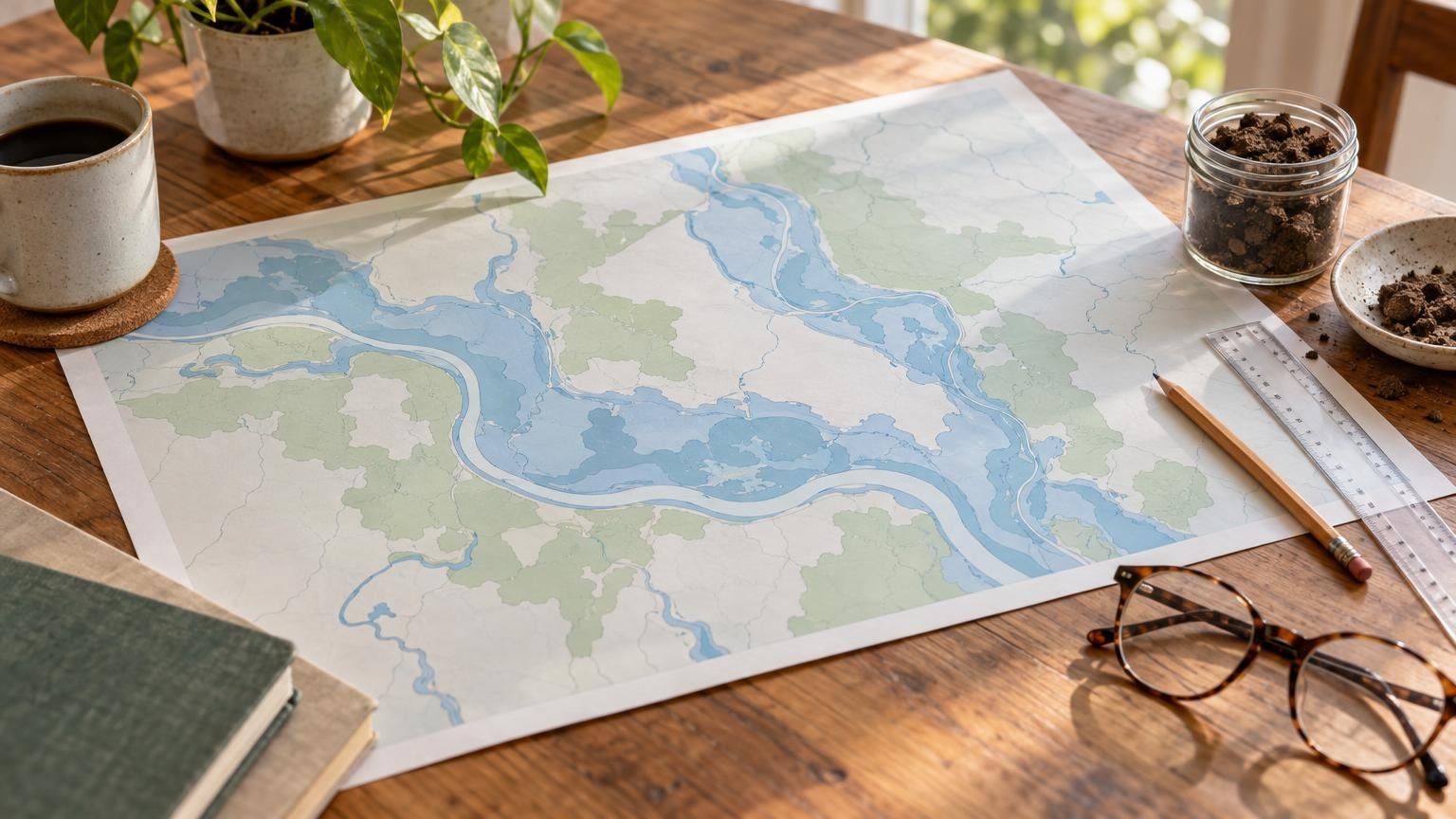
These are area-wide shares. Each one points you to a question about one specific house.
| Layer | Bouldin Creek reading (Local Team, read Oct. 27, 2026) | What it tells you | What it doesn't |
|---|---|---|---|
| FEMA flood zone | 5.8% of homes in the 1% annual-chance floodplain (FEMA data as of June 10, 2026) | The map lenders and insurers use | Whether this house floods |
| City floodplain model (Atlas 14) | 7.4% of homes (city model as of April 27, 2023) | Austin's newer rainfall model maps more land than FEMA | A survey of the lot |
| Soils | 9.8% of homes on highly expansive clay; the soil survey covers 80% of homes | Where foundations move with wet and dry seasons | This house's foundation |
| Hail | About 1.7 hail days a year nearby vs. a 1.56 metro average (NOAA, 2006–2025) | Relative roof exposure | The roof's age or condition |
| Special districts | No MUD or similar district | No extra district tax line | Your full tax bill |
| Internet | Fiber reported at 89.6% of locations (FCC, as of Dec. 31, 2025) | What providers filed | Service at one address |
What to do with each: look up the exact address on FEMA's Flood Map Service Center and the city's ATX FloodPro. Ask the seller for any foundation repair records, and read the inspector's report on the slab. Ask for the roof's age and the insurance claims history. Check each internet provider by the exact address.
What about transit, permits and 311?
Planned transit. The Austin Transit Partnership light-rail plan (as of July 23, 2026) places Auditorium Shores Station inside the Bouldin Creek outline and SoCo Station, part of phase 1, about 10 feet outside it. There are 44 CapMetro stops inside the area, 8 of them with peak service every 15 minutes or better. A planned station is not a built one. See our Austin transit data.
Permits. Within 800 m, the city issued 1,009 construction permits in the past two years, including 54 new residential buildings. Inside the outline over 24 months: 32 new single-family homes, 2 multifamily, 19 ADUs, 57 demolitions and teardowns, 153 remodels, 19 site plans and 3 zoning cases. The more useful search is the house's own permit history: search its address on Austin Build + Connect, and ask about any addition or remodel with no permit behind it.
311 and code. Within 800 m there were 2,024 311 requests in 12 months; the most common type was "Parking Violation Enforcement" (628). ZIP 78704 logged 1,727 code-compliance cases. A 311 request records that someone reported something. A code case is an investigation, not a confirmed violation. Neither describes a block or the people on it.
What changes outside Austin city limits?
Our second example is Local Team's Round Rock guide, in Williamson County. Its half-mile circle is 100% inside Round Rock city limits, so City of Austin permits, site plans, 311 and crash records don't apply. The page leaves them out rather than showing zero. A blank layer there means another city keeps the records, not that nothing is planned. State TDLR filings still show (5 in the past 12 months).
The special-district line matters more there. As of Oct. 27, the page shows 97.7% of homes inside the Upper Brushy Creek WCID at $0.0170 per $100 of value (2025), while Round Rock MUD 1 covers 1.7% of homes at $0.6800 per $100. Same city, a 40-fold difference in that one line, so check the district for the exact address.
Selling or renting instead?
If you're selling, this is the list a buyer's agent will pull up about your house. Read your own address the way a buyer will, and gather your permit records and any foundation or roof work first. Local Team's home value page takes requests for a comparative market analysis (CMA) reviewed by a local agent. Its own wording: "No automatic price estimate," and a CMA "is not an appraisal." Its selling guide walks through the steps before listing.
If you're renting, the same layers apply to an apartment's address. Local Team's apartment search help takes a short questionnaire (rent range, move date, pets), and says availability, fees and move-in offers must be confirmed with the property.
If you're buying, start with the metro home search, or request a Bouldin Creek shortlist. The free address research dossier in its "What Is Being Built Near an Austin Address?" field guide turns all of this into a one-page brief per house.
What locals should know
- Nine city site-plan filings at eight addresses sit within half a mile of Bouldin Creek's center (filed Oct. 27, 2025 to Oct. 26, 2026). None is an approval.
- The Drop at 1608 S. Congress lists a Nov. 1, 2026 start on its state filing; Standard Austin at 1603 S. Congress lists Aug. 24, 2026 to March 1, 2027.
- Two flood maps: FEMA puts 5.8% of Bouldin Creek homes in the 1% floodplain; the city's Atlas 14 model puts 7.4% there.
- A blank layer outside Austin means another city keeps the records.
- One address in two layers is usually one project.
- More nearby: our ZIP 78704 page, Austin storms and flood claims data, internet by city, and the earlier walk-throughs for Windsor Park and Crestview and Pflugerville.
FAQ
What public records should I check before touring a house in Austin? The home's own building permits, nearby site plans and zoning cases, TDLR state registrations, the FEMA flood zone and the city's floodplain model, the soil survey, and any special district on the tax bill. Austin Local Team's listing and neighborhood pages show these within 800 m of a home, each with its sync date.
What does "Awaiting Update" mean on an Austin site plan? The City of Austin has sent review comments and is waiting for the applicant to respond. It's a stage in review, not an approval or a denial. Look up the case number on Austin Build + Connect for the current status, because copies of the data can lag.
Why do FEMA and the City of Austin show different floodplains? FEMA's effective map is what lenders and insurers use. The city's Atlas 14 model uses updated rainfall data and often maps a larger area. In Bouldin Creek, FEMA covers 5.8% of homes and the city model 7.4% (read Oct. 27, 2026). Check both for the exact address.
Does Austin Local Team estimate what a home is worth? No. Its home value page says "No automatic price estimate." Instead it takes requests for a comparative market analysis reviewed by a local agent, which it describes as a pricing conversation, not an appraisal.
Who runs Austin Local Team? Austin Local Team is a sister site of Austin Texas Things, brokered by All City Real Estate, ltd. Co. (TREC #9003633). Its home search uses Unlock MLS listings as distributed by MLS GRID, alongside public records from the Zabalist database.
Sources: City of Austin site plans via the Zabalist database (records last synced June 11 to Oct. 25, 2026); TDLR TABS registrations TABS2027000624 and TABS2027001836 (read Oct. 27, 2026) and TABS2026023455 (our database copy); Austin Local Team's Bouldin Creek, Round Rock, neighborhoods, home value, sell and apartments pages (read Oct. 27, 2026), which cite FEMA, the City of Austin, USDA NRCS, NOAA, FCC, CapMetro, the Austin Transit Partnership, TCEQ and the Texas Comptroller. Austin Local Team is a sister site of Austin Texas Things. We'll check The Drop's filing again after its listed Nov. 1 start. Follow @austintexasthings for the update.
Related Austin Data
More Austin Guides
Share this article